01
Primary clarification
ProblemFine solids pass the primary clarifier
What it doesCoagulates fine solids so more settle out early
Where to doseFlash mixer or inflow channel before the primary clarifier
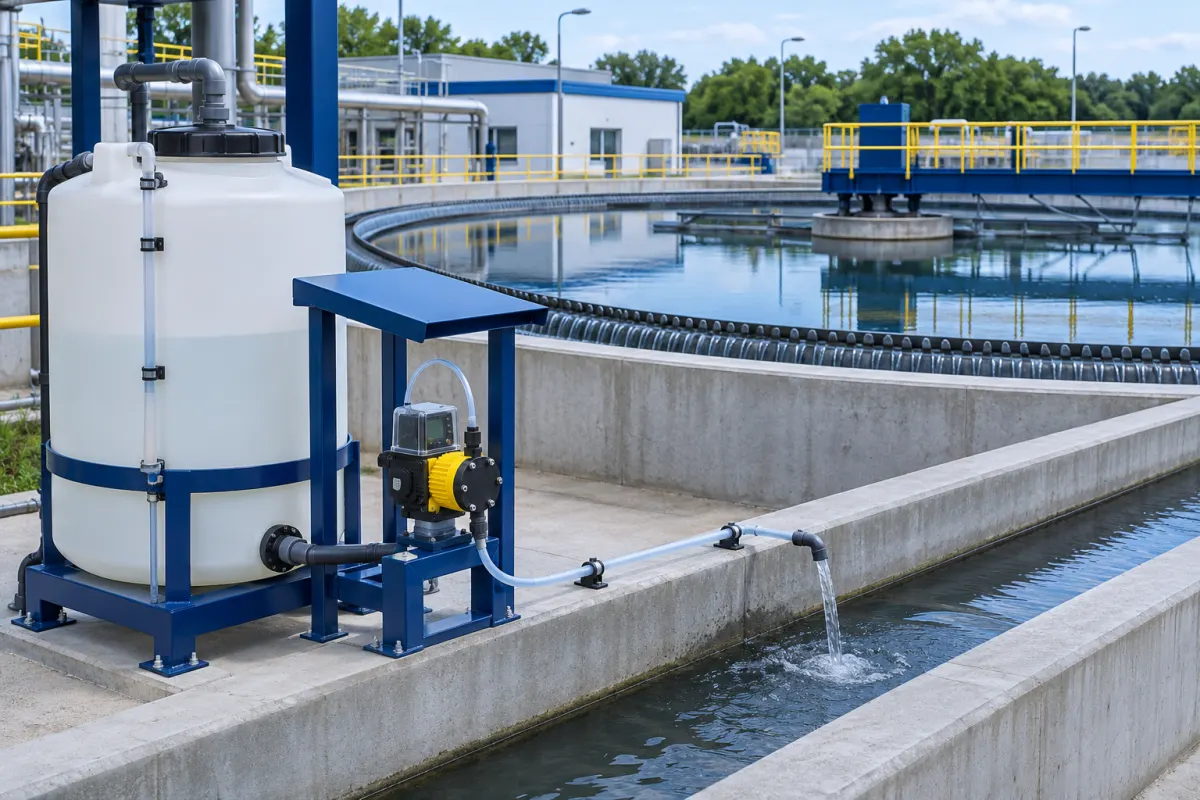
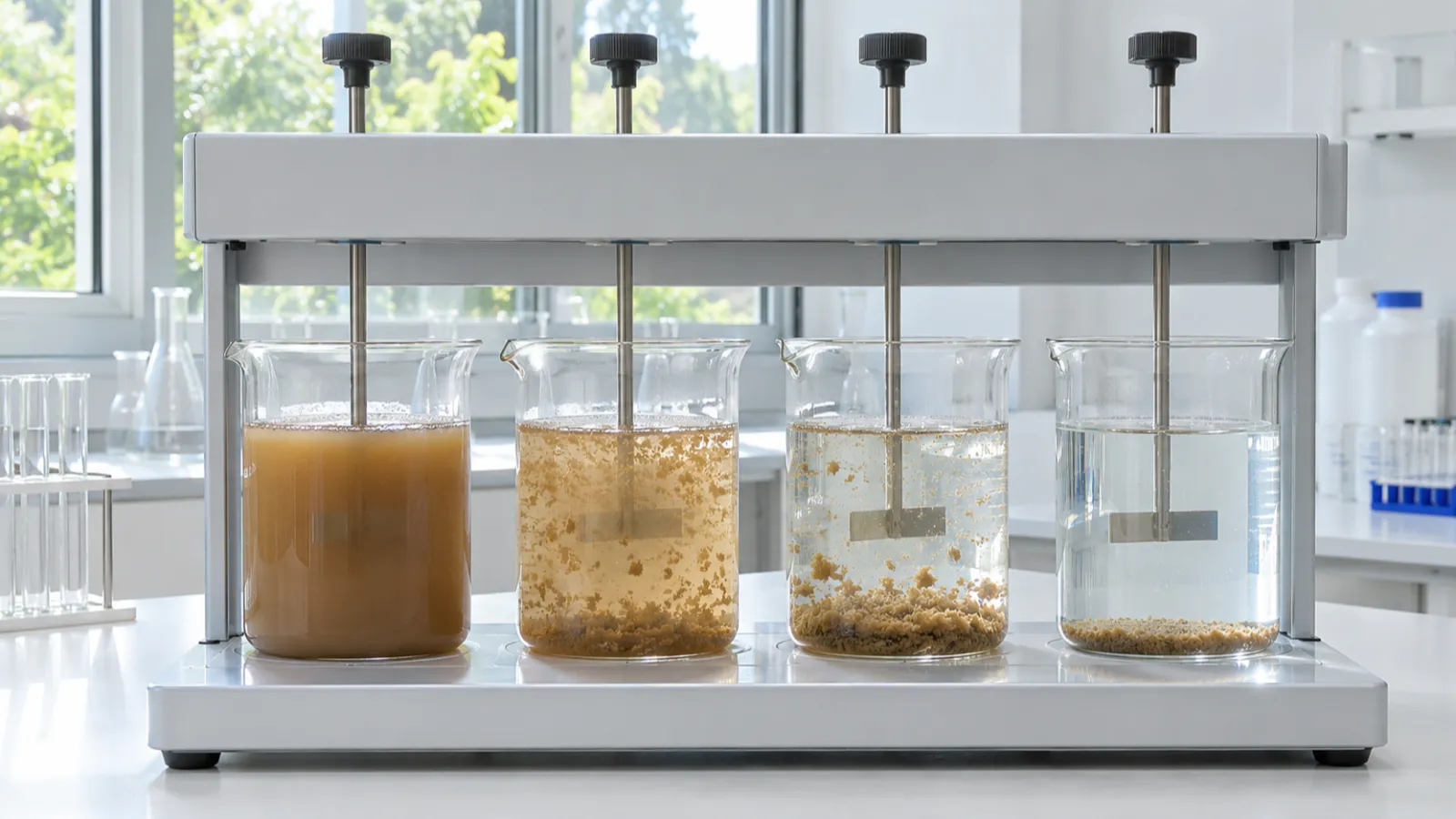
Two products, each on its own line of the plant. Grades and dose are set on a jar test with your own water and sludge — not taken from a catalogue.

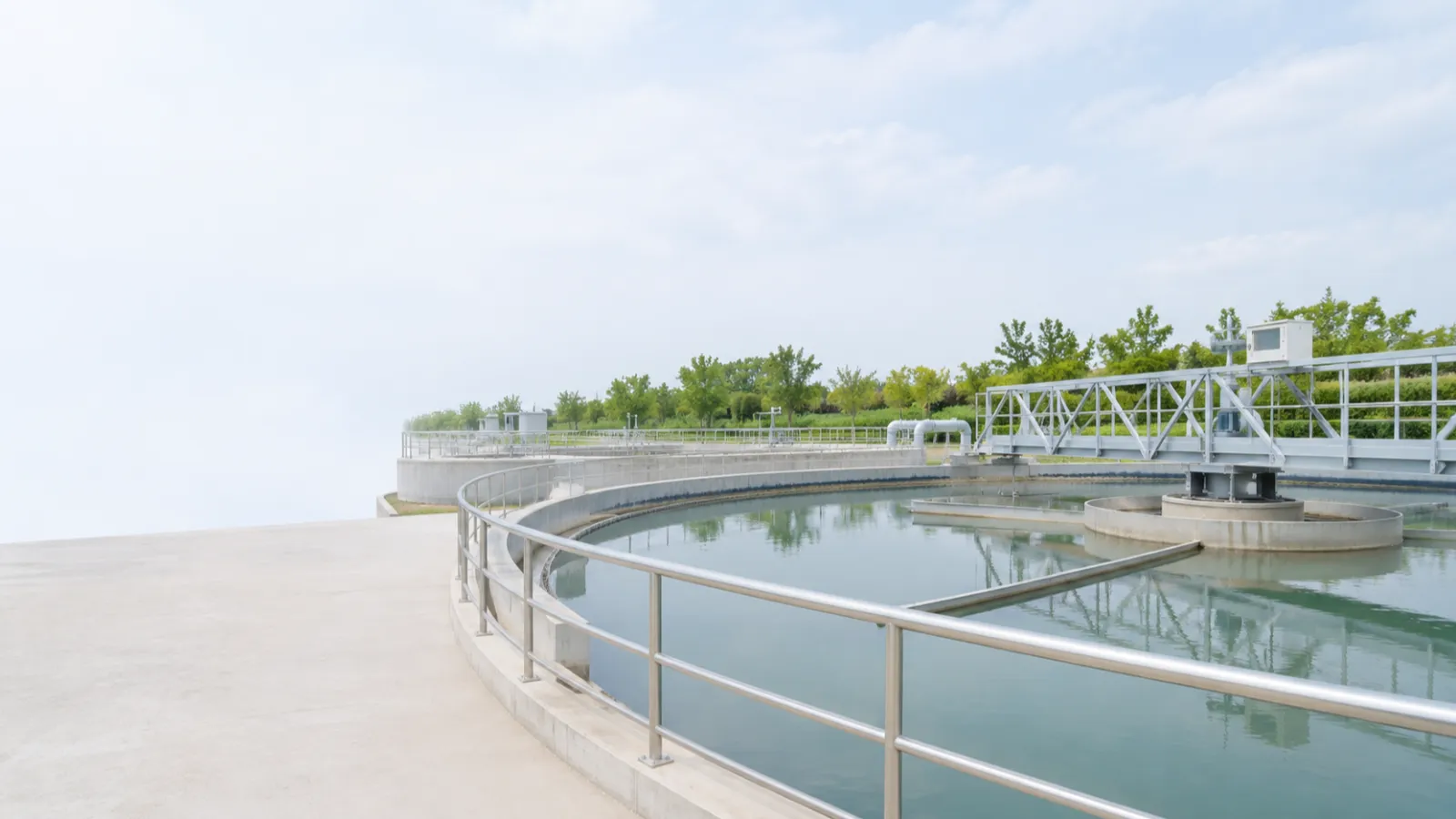
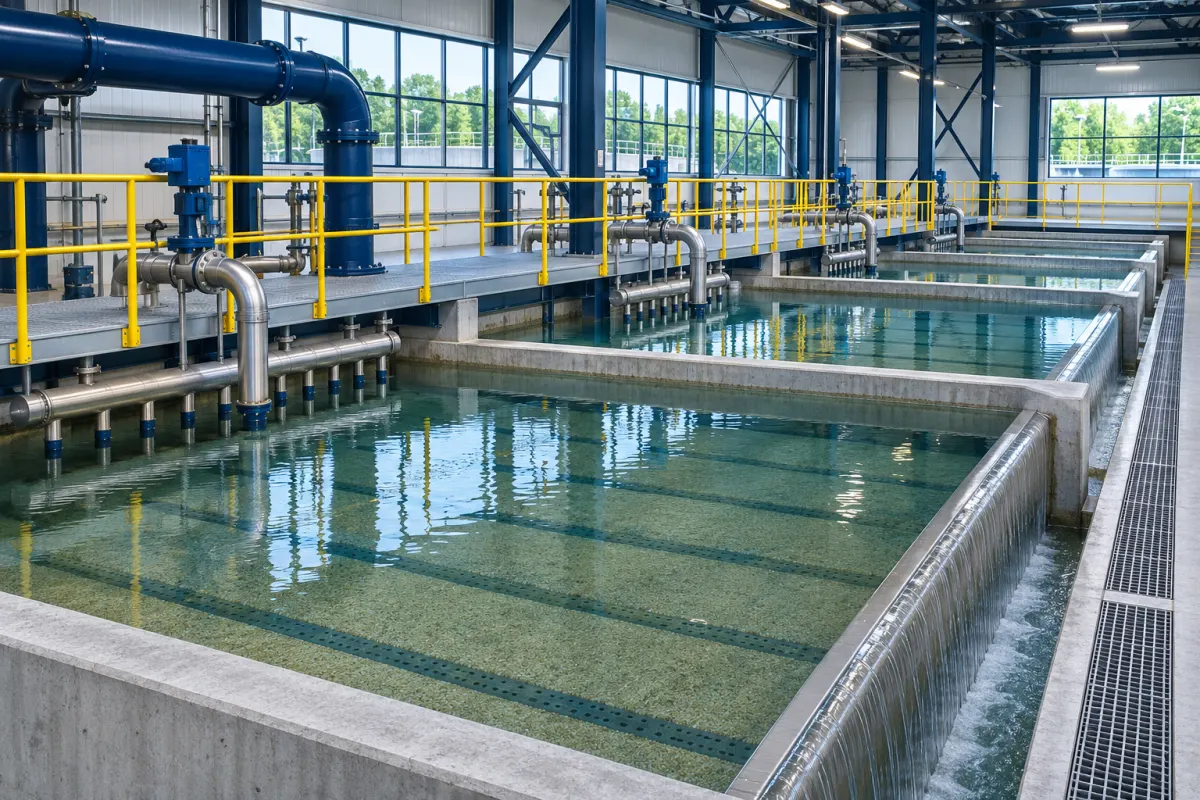
Follow the water from inlet to outlet. Each problem shows up at a different stage, which is why municipal plants often use two products.
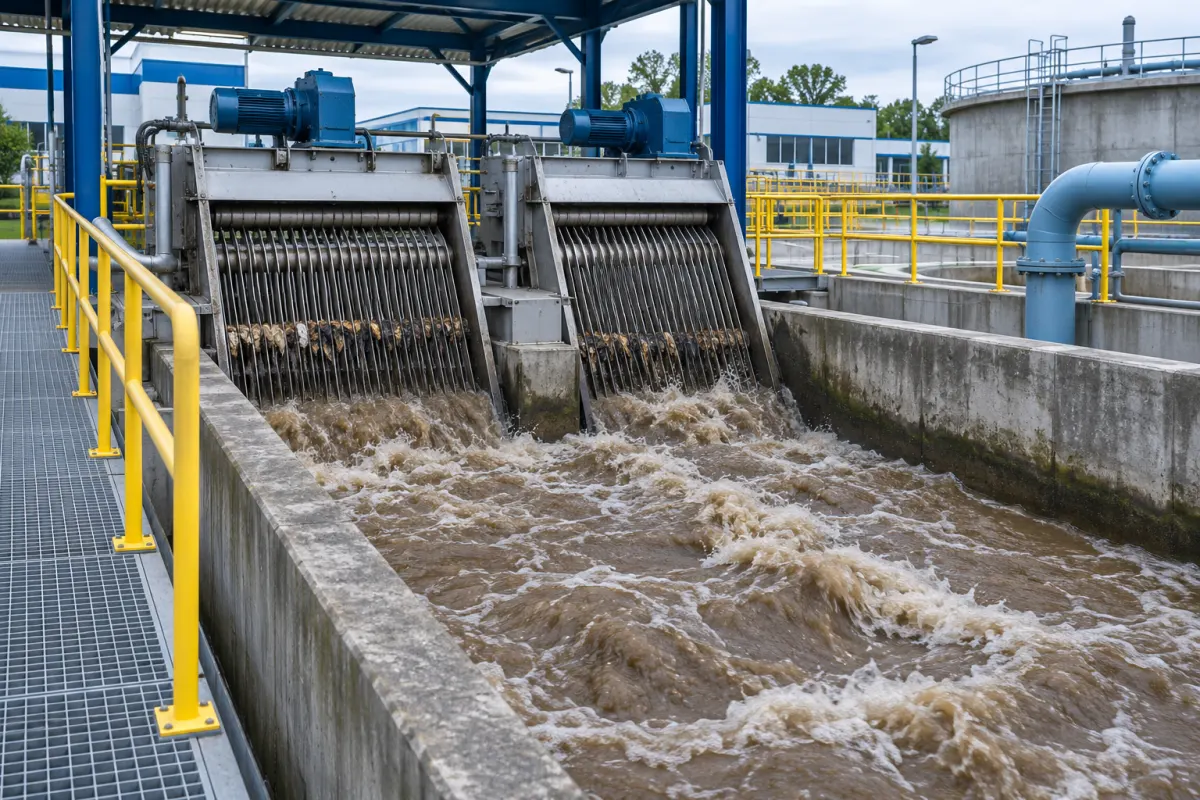
At the inlet
Inflow and sludge change with season, rain and industrial discharges. A grade that worked last year may not today.
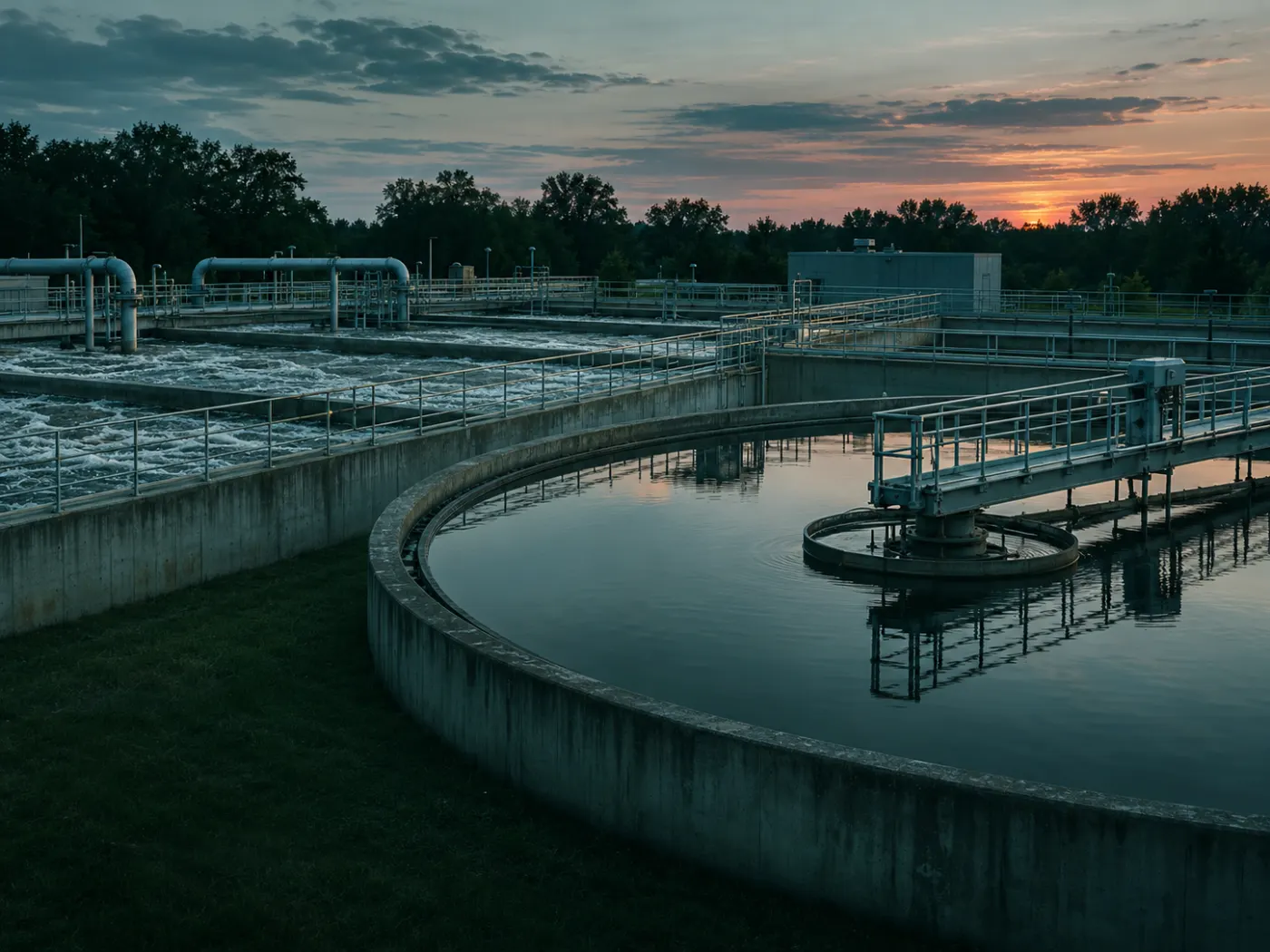
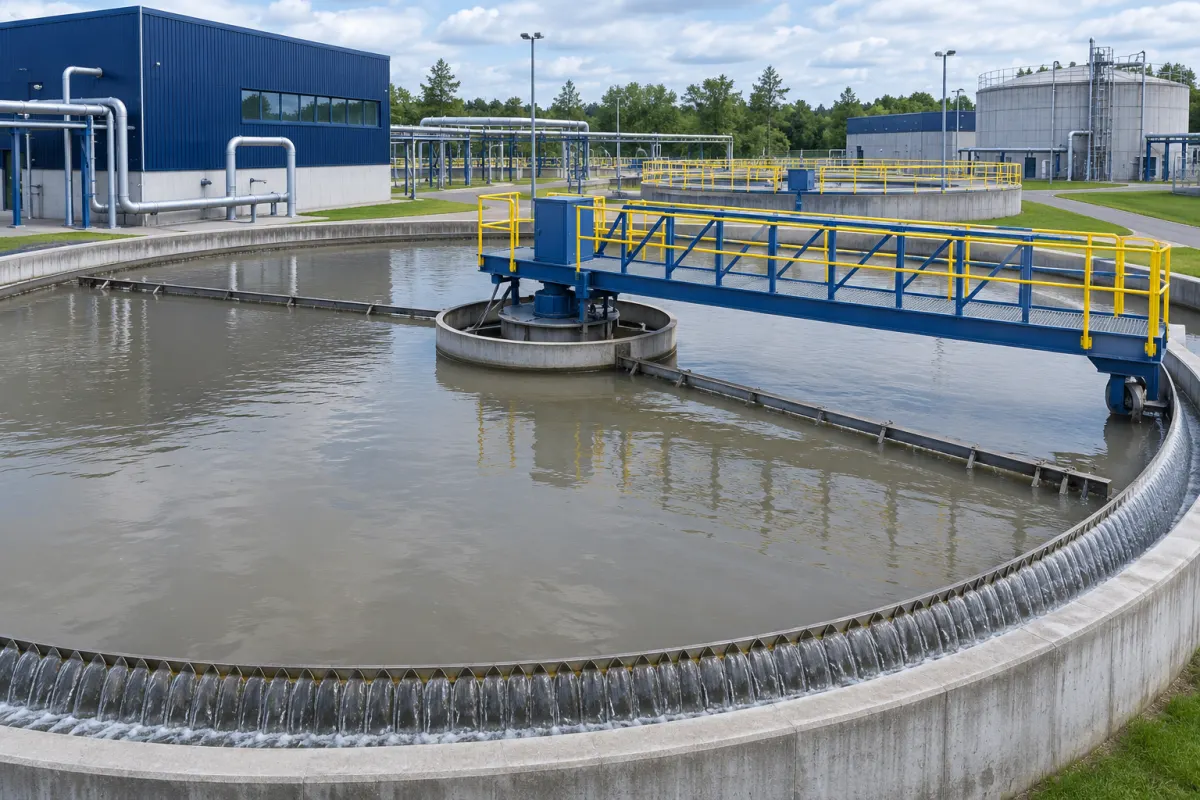
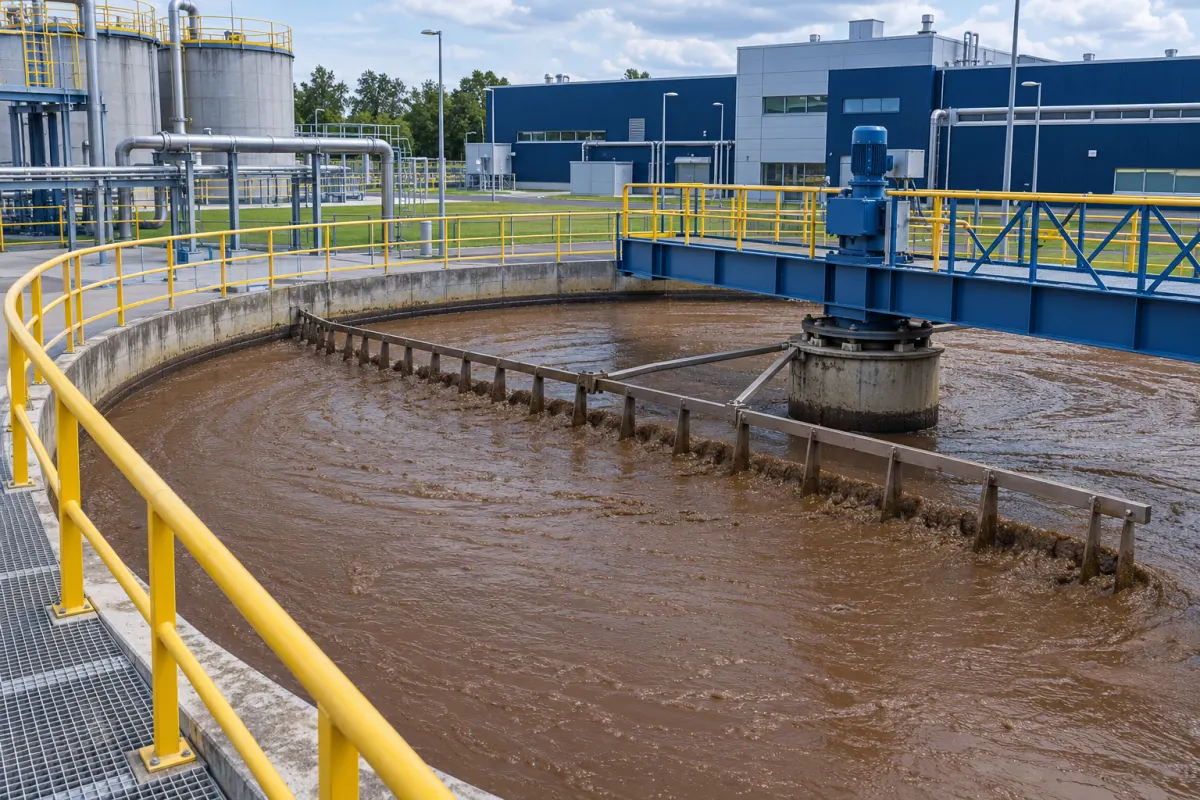
Primary clarifier
Colloids and fine particles carry a negative charge and repel each other, so they slip through the clarifiers.
Secondary · filter
Biological treatment alone often cannot meet a tight phosphorus limit. Chemical precipitation closes the gap.
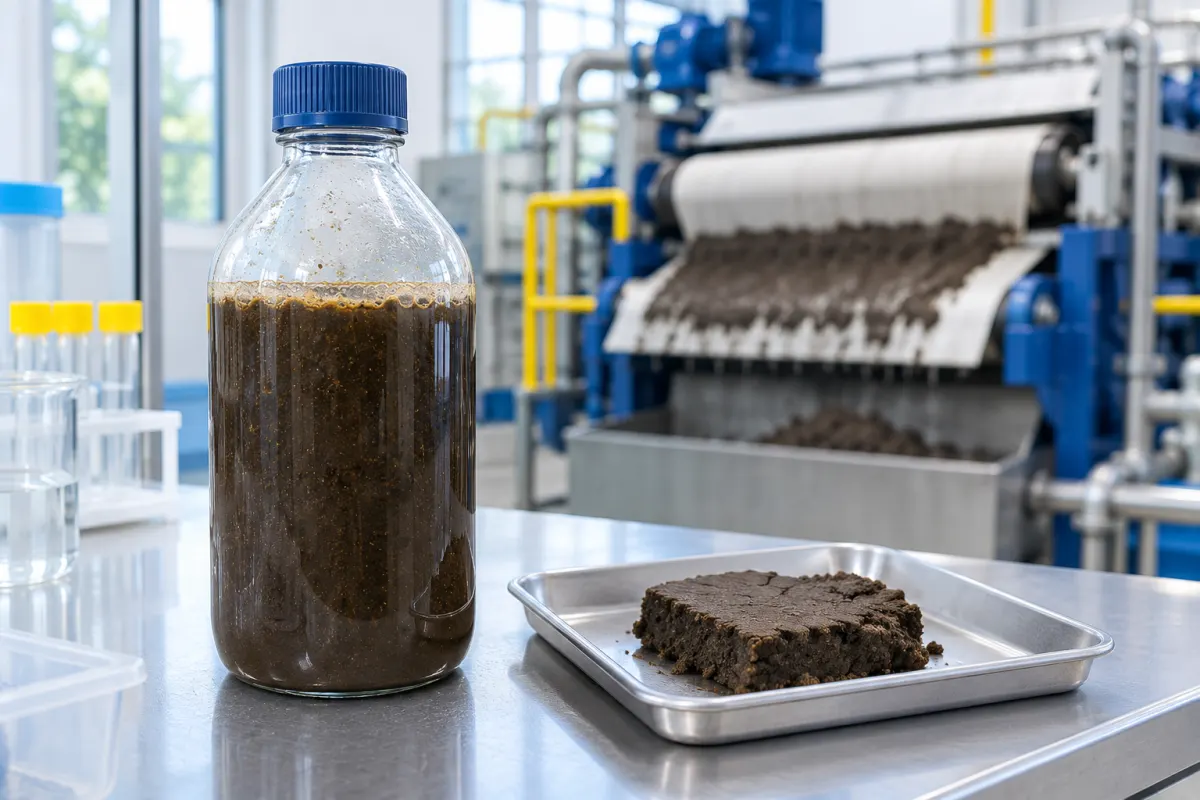
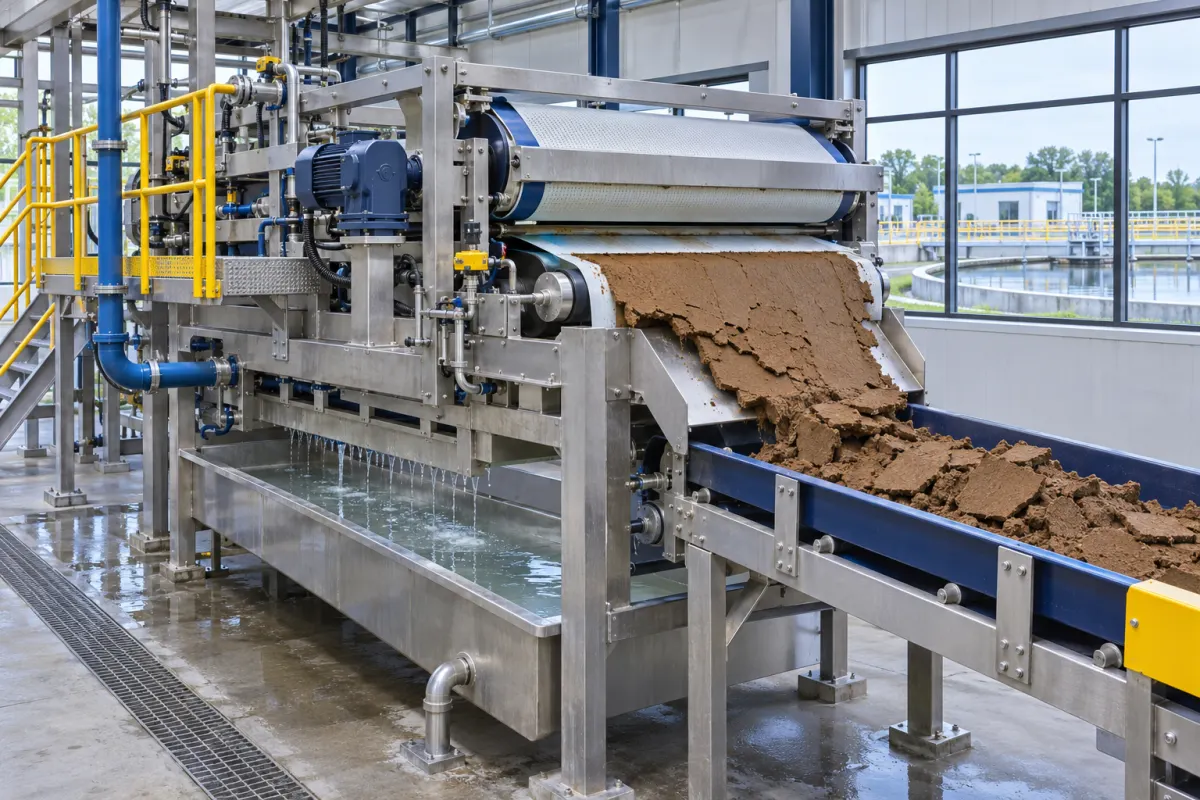
Sludge press
A wet cake means more trucks and higher disposal cost; a cloudy filtrate sends solids back to the head of the plant.
Most plants use PAC on the water line and cationic PAM on the sludge line. Which stages you need depends on your plant and your discharge limits.
01
ProblemFine solids pass the primary clarifier
What it doesCoagulates fine solids so more settle out early
Where to doseFlash mixer or inflow channel before the primary clarifier
02
ProblemEffluent phosphorus above the limit
What it doesAluminium binds phosphate into a solid that settles or is filtered out
Where to doseBefore the secondary clarifier or the tertiary filter
03
ProblemTurbidity and solids in the final effluent
What it doesForms micro-flocs that the filter can catch
Where to doseAhead of the filter, with fast mixing
04
ProblemThin sludge, large volumes to handle
What it doesFlocculates sludge so mechanical thickeners concentrate it
Where to doseFeed line to the thickener
05
ProblemWet cake, cloudy filtrate
What it doesBridges sludge particles into strong flocs that release water on the press
Where to doseSludge feed pipe, shortly before the press or centrifuge
Send us your flow sheet and we mark the dosing points for your plant.
Coagulates fine solids so more settle out early.
Binds phosphate into a solid that settles with the sludge.
Forms micro-flocs the filter can catch, for low turbidity and phosphorus.
Flocculates thin sludge so the thickener concentrates it.
Builds strong flocs that release water for a drier cake.
Clarification, phosphorus removal and filtration. 28% and 30% grades made to GB/T 22627-2022.
View product →Thickening and dewatering on belt presses, screw presses and centrifuges. Charge and molecular weight matched to your sludge.
View product →Municipal sludge varies from plant to plant, so we test on your own sample before recommending a grade.
01
Send water and sludge
1 litre of water from the point you want to treat, and 1 litre of the sludge that goes to your press.
02
We test side by side
Several PAC grades on the water and several cationic PAM grades on the sludge, compared in parallel.
03
Written report
Recommended grades, the PAC : PAM ratio where both are used, and a starting dose.
04
Trial on your equipment
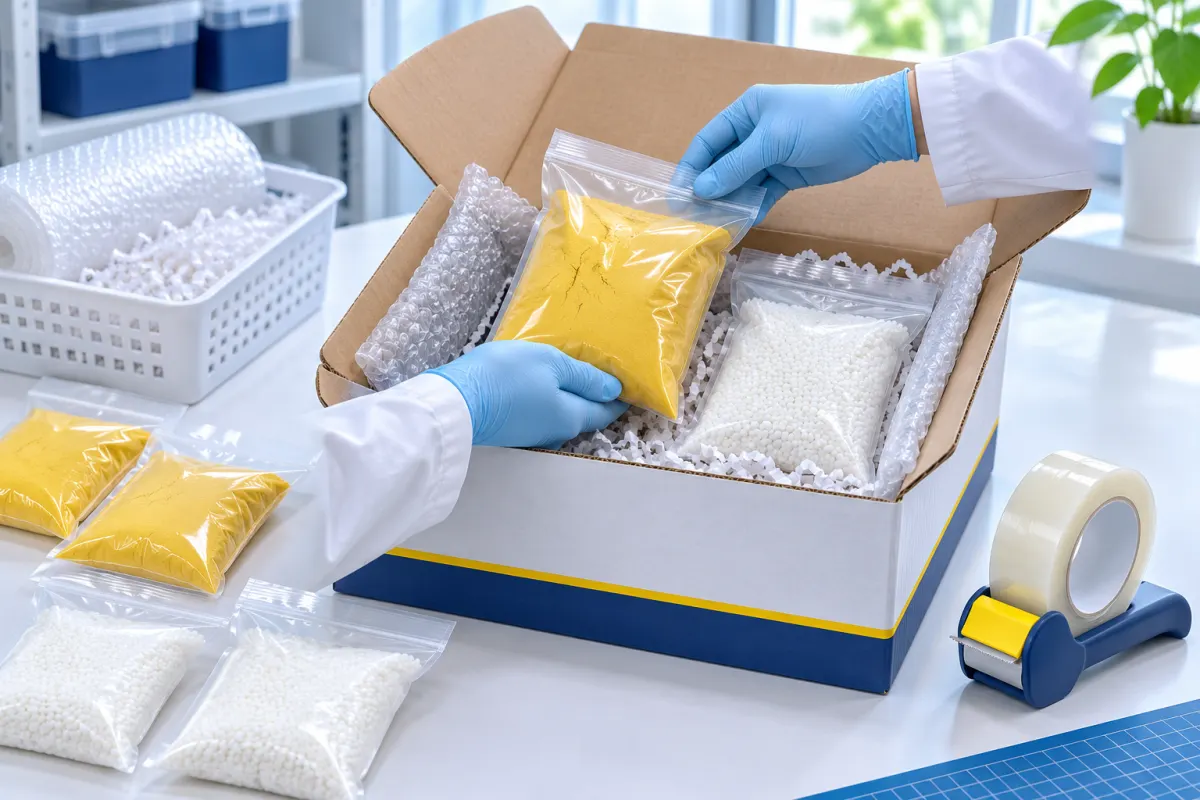
1 kg samples of the recommended grades for a trial on your own clarifier or press.
Short answers on grades, phosphorus and dewatering. Anything else, ask us directly.
Cationic PAM for all three, because municipal sludge is mostly organic. The best charge density and molecular weight differ with the sludge and the machine, so we test several grades on your own sludge and recommend one in writing.
Yes. The aluminium in PAC binds phosphate into a solid that is removed in the clarifier or filter. The dose depends on how much phosphorus you need to remove; a jar test on your effluent gives the starting point.
Not always. Many plants use PAC on the water line and cationic PAM on the sludge line, but some only need one of them. The jar test shows which stages benefit and in what ratio.
Yes. PAC and PAM ship in one container, in 25 kg bags or 1 t big bags, with a COA for every batch.
No. Industrial PAC made to GB/T 22627-2022 is the usual choice for wastewater and sludge. Drinking-water PAC to GB 15892-2020 is only needed where potable-water standards apply.
1 litre of water from the point you want to treat and 1 litre of sludge from the press feed, with a note on your dewatering equipment, the product and dose you use now, and your discharge limits.
We send 1 kg samples of the recommended grades for a trial on your own equipment. Samples are free of charge; the buyer pays the courier.
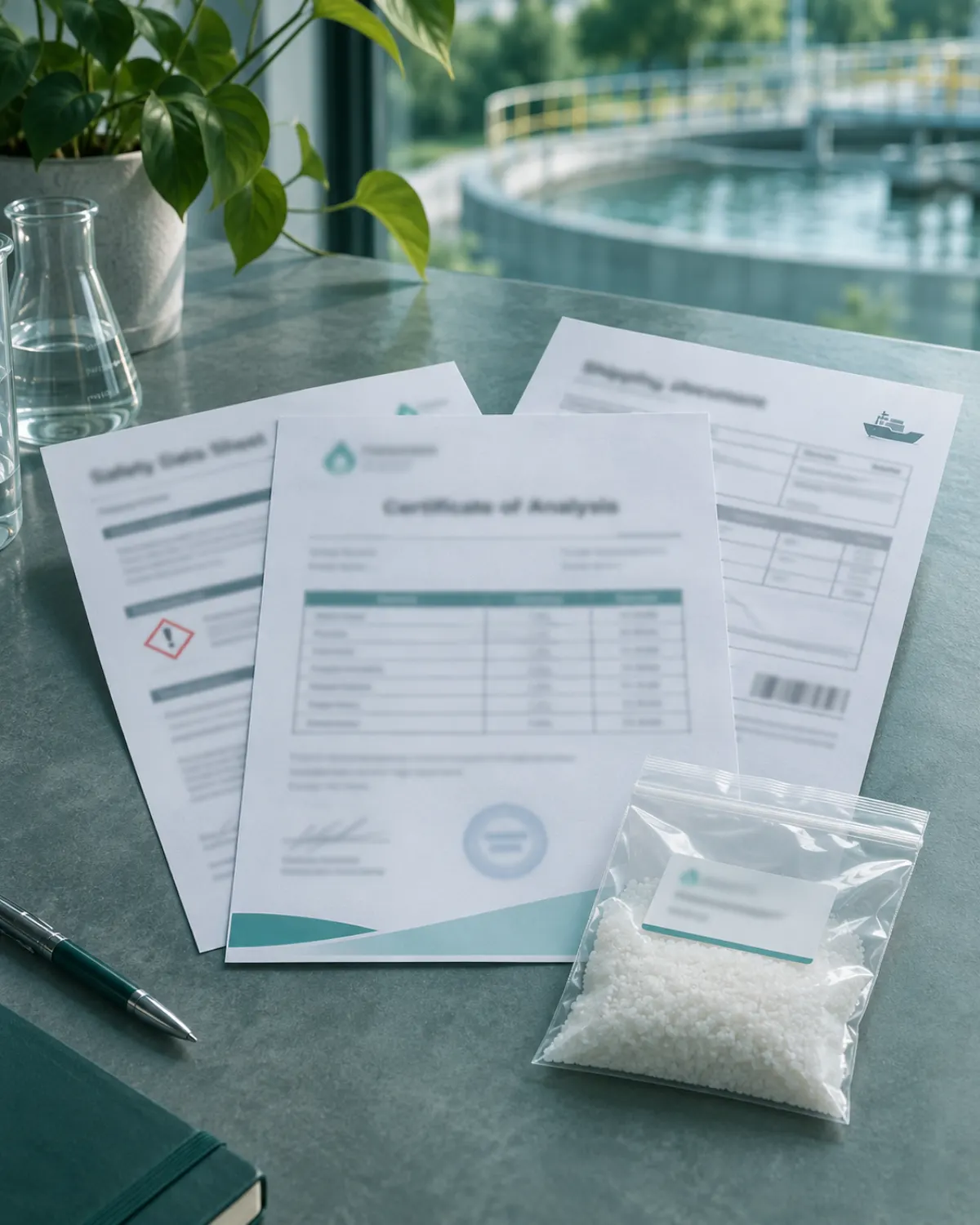
A certificate of analysis (COA) for every batch, plus the TDS and SDS. A certificate of origin comes with every shipment, and Form E for ASEAN destinations.
Minimum order is 1 tonne per grade. We accept T/T (30% deposit, balance before shipment) and L/C at sight. Trial orders start at 1 tonne, so you start small and scale up once the grade is proven.
Tell us what you treat and what you use now. We reply within one working day and tell you where to send the sample.