What “fish eyes” are and why they cost you money
When dry polyacrylamide powder hits water in a clump, the outside grains absorb water immediately and swell into a waterproof gel skin. Dry powder stays trapped inside, forming translucent rubbery beads called fish eyes.
Fish eyes never dissolve in the dosing line. They plug metering pump check valves, clog spray nozzles, leave gel spots on filter cloths, and mean 10–30% of the polymer you paid for never reaches your water.
Recommended make-down parameters
| Parameter | Cationic PAM | Anionic PAM | Nonionic PAM |
|---|---|---|---|
| Working strength | 0.1–0.2% (1–2 g/L) | 0.1–0.2% (1–2 g/L) | 0.1–0.3% (1–3 g/L) |
| Stirrer speed | 60–200 rpm | 60–200 rpm | 60–200 rpm |
| Dissolution time (GB max) | ≤ 60 min (1 g/L) | ≤ 90 min | ≤ 120 min |
| Make-down water | Clean tap / low-SS water | Clean tap / low-SS water | Clean tap / low-SS water |
| Solution shelf life | Use within 24 h | Use within 24–48 h | Use within 24–48 h |
Five steps for lump-free PAM make-down
- 1Fill with clean water first
Use neutral, low-suspended-solids water (avoid hot water above 50 °C or high-chlorine effluent, which degrade polymer chains).
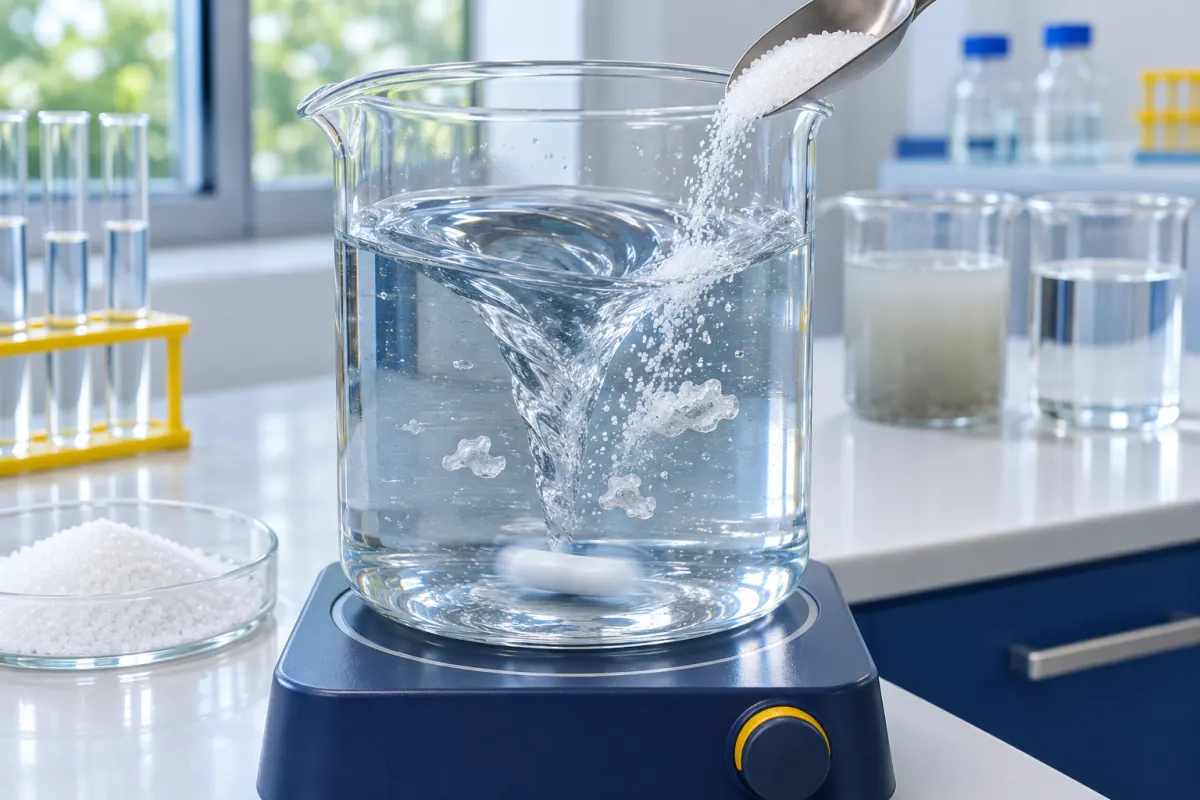
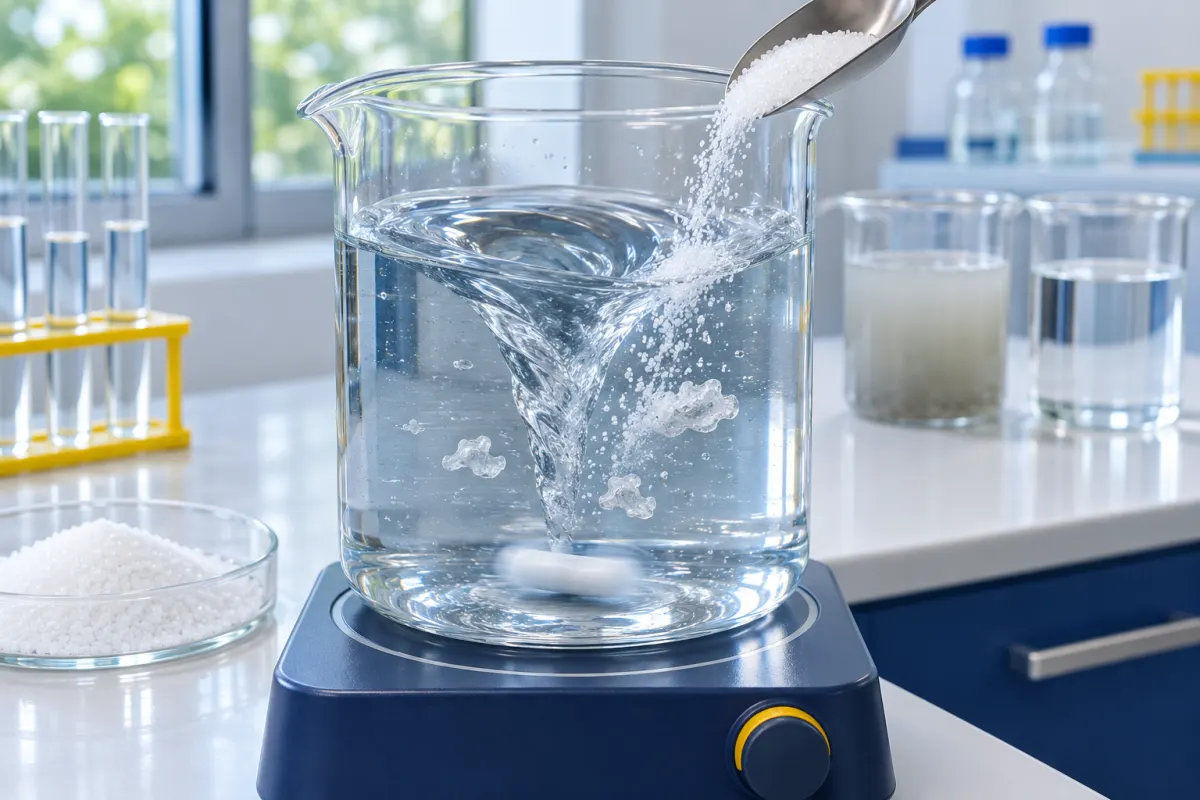
- 2Start a gentle vortex
Run the agitator fast enough to form a smooth surface vortex without splashing air into the tank.
- 3Feed slowly into the vortex shoulder
Sprinkle powder thinly and steadily (or use a dry-powder eductor) so each grain wets individually before touching another grain.
- 4Age gently for 45–90 minutes
Once all powder is wetted, let the tank stir slowly until the solution looks completely clear and uniform with zero cloudy specks.
- 5Transfer with low-shear pumps
Use progressive-cavity (mono) or diaphragm pumps — avoid high-speed centrifugal pumps that shear polymer chains.
What to check if lumps still appear
PAM absorbs humidity from the air and pre-clumps inside the bag. Always reseal open bags tightly and store off the floor.
Below 10 °C, hydration slows significantly. Extend ageing time by 20–30 minutes or keep solution strength at 0.1%.
Dissolved iron degrades PAM viscosity. Use PE, FRP or stainless-steel make-down tanks.
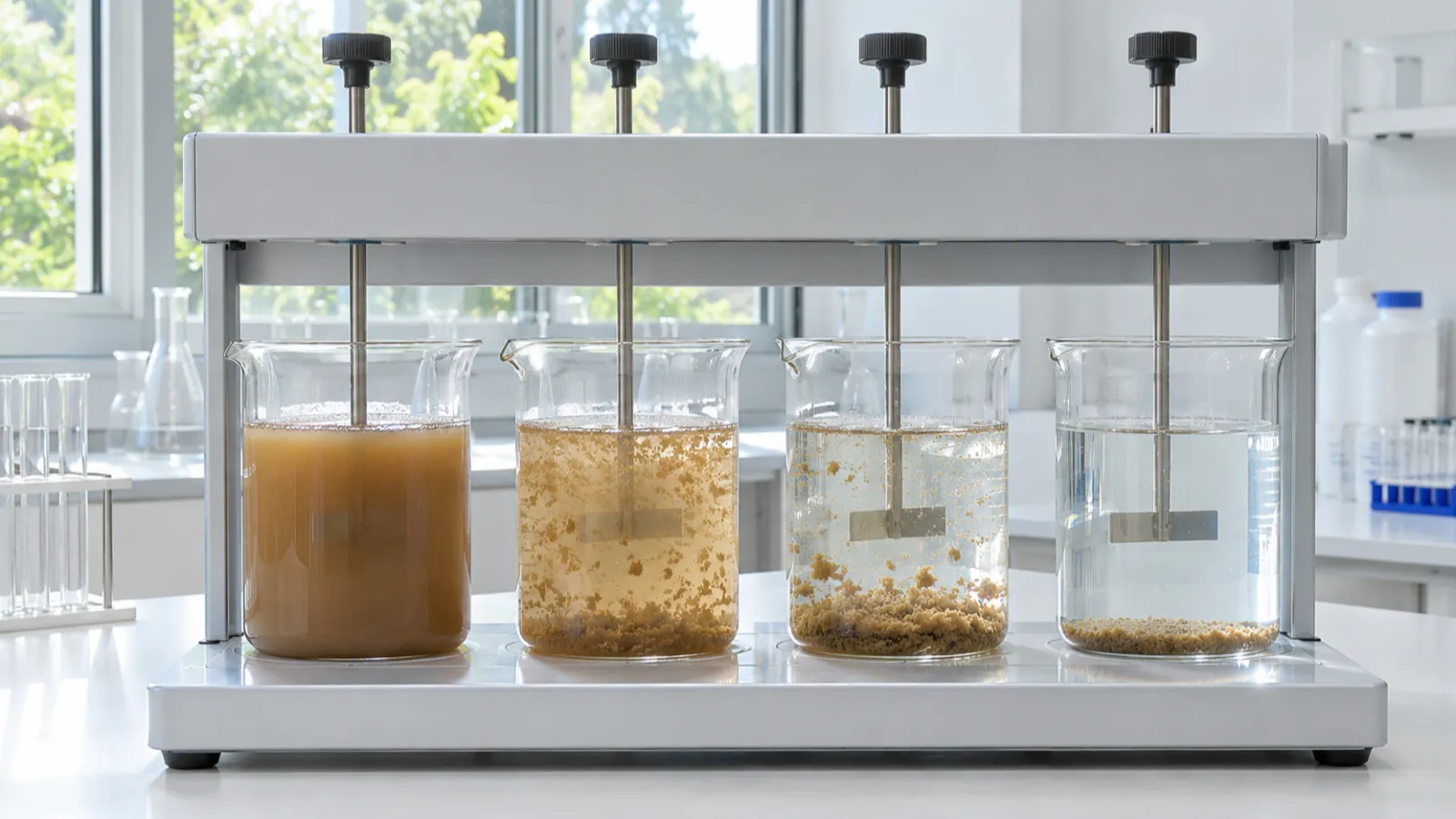
Send 1 litre of raw water or sludge. We test PAC and PAM combinations side by side and send a written report with grades, ratio and starting dose.
How it works →FAQ
Short answers. For your own water, a jar test gives the real one.
Can I use hot water to dissolve PAM faster?
Avoid water above 50 °C. Warm water around 20–35 °C hydrates cleanly, but hot water breaks polymer chains and permanently lowers flocculation performance.
How do I know when PAM is fully dissolved?
Scoop a spoonful of solution and pour it slowly back into the tank: it should form a smooth, clear, glassy thread with no grainy specks or translucent beads.
How long can I keep a prepared PAM tank?
Best practice is to prepare only what you consume within 24 hours, especially for cationic PAM.
 Checklist
 Guide
 Guide