The three formulas you need
| What you want | Formula | Worked example (200 m³/h, 2 mg/L PAM, 20 h/day, 0.2% sol.) |
|---|---|---|
| Dry product per day (kg) | Flow (m³/h) × Dose (g/m³) × Hours ÷ 1,000 | 200 × 2 × 20 ÷ 1,000 = 8 kg/day |
| Monthly consumption (t) | kg/day × 30 ÷ 1,000 | 8 × 30 ÷ 1,000 = 0.24 t/month |
| Dosing pump rate (L/h) | (Flow × Dose ÷ 1,000) ÷ (Strength % ÷ 100) | (200 × 2 ÷ 1,000) ÷ 0.002 = 200 L/h |
Want to plug in your own plant numbers right now? Use the interactive dose calculator on our Guides page.
For sludge dewatering (kg per tonne of dry solids)
Sludge presses are usually quoted in kg of dry PAM per tonne of dry solids (kg/t DS). Multiply your sludge feed flow (m³/h) × sludge solids concentration (% ÷ 100) to get tonnes of dry solids per hour, then multiply by your jar-test kg/t DS dose.
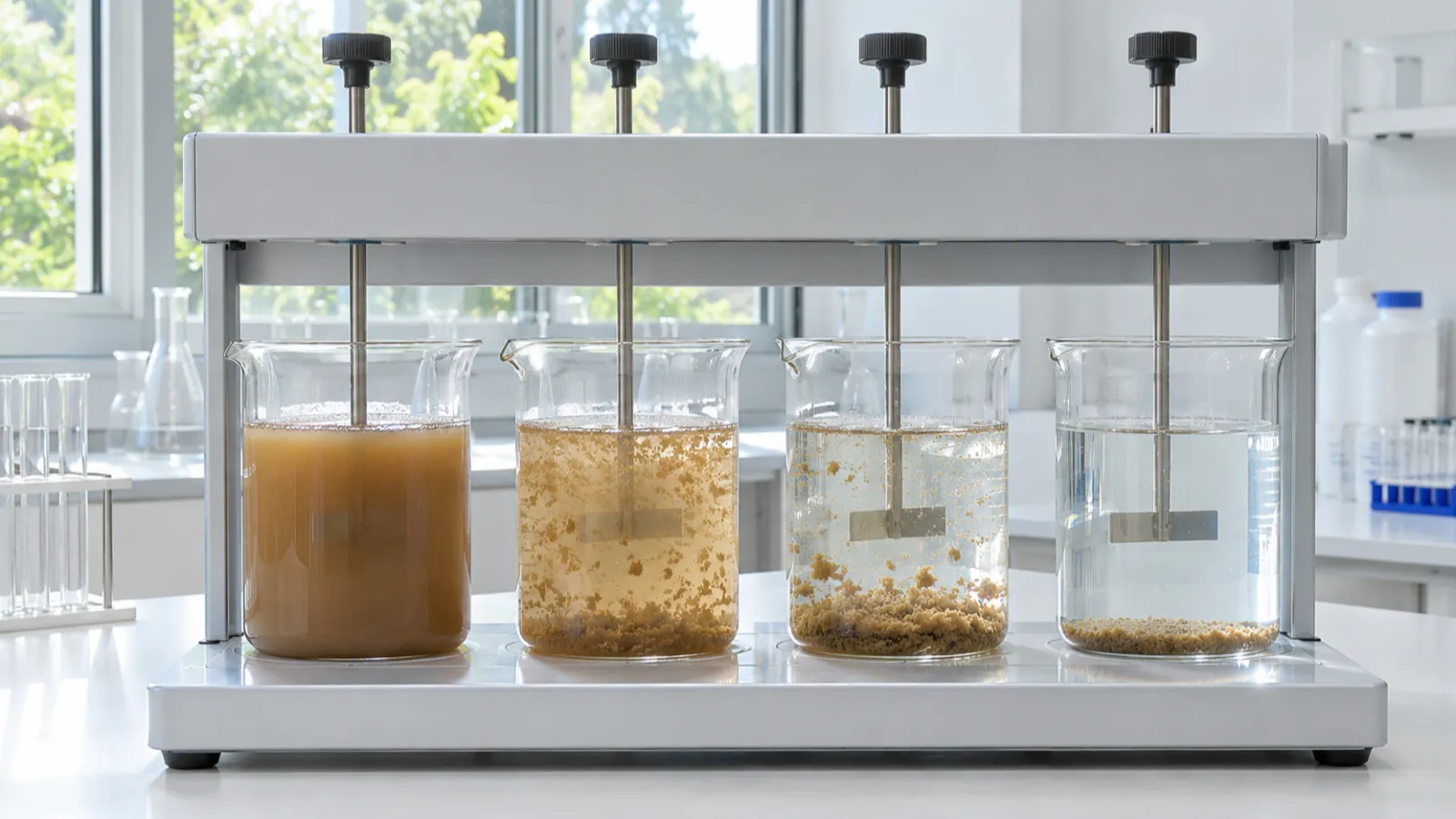
Send 1 litre of raw water or sludge. We test PAC and PAM grades side by side and send a written report with grades, ratio and starting dose.
How it works →FAQ
Short answers. For your own water, a jar test gives the real one.
What is a typical starting dose for PAC and PAM?
Doses depend entirely on your water turbidity, COD and solids — a jar test on 1 L of your water gives a reliable starting range before buying.
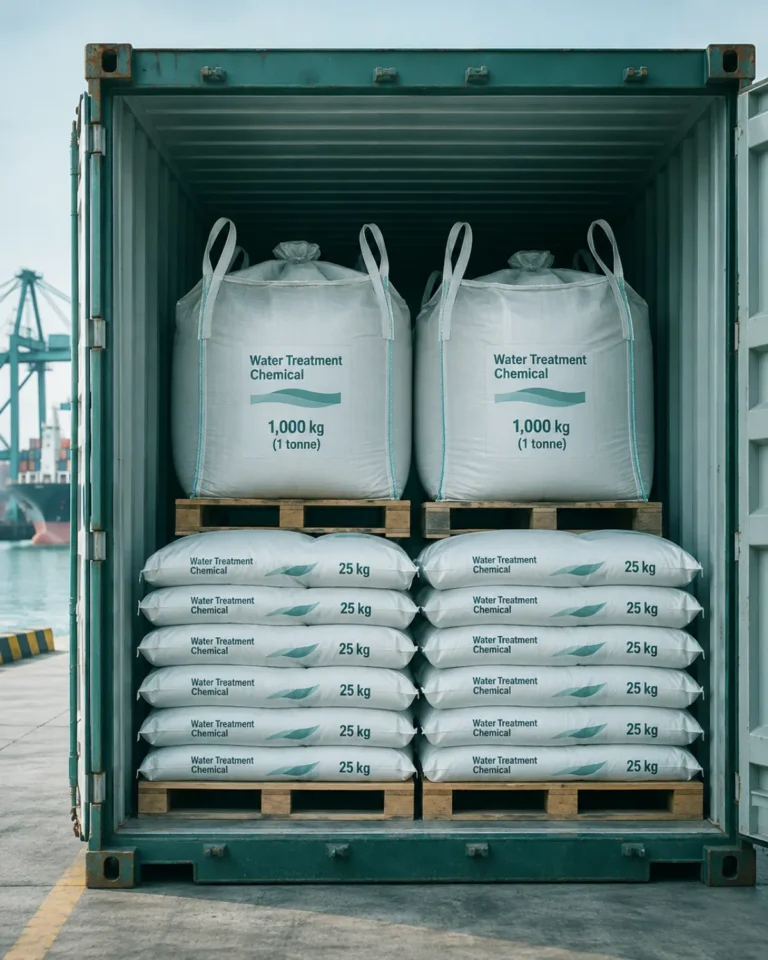
How do I plan container quantities from daily kg?
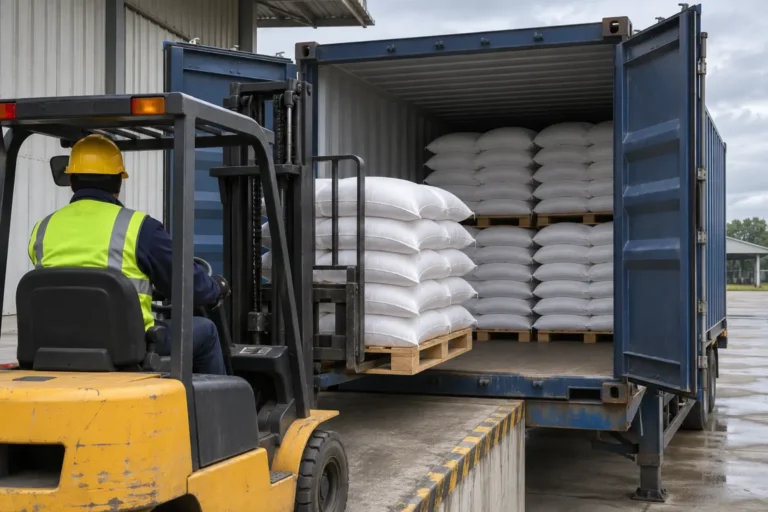
Multiply daily kg × 30 days to estimate monthly tonnage; PAC and PAM can be combined in one 20 ft container.
 Checklist
 Guide
 Guide