The two Chinese national standards side by side
| Item | Industrial PAC | Drinking-water PAC |
|---|---|---|
| Standard | GB/T 22627-2022 | GB 15892-2020 (mandatory) |
| Al₂O₃ (solid) | 28% / 30% grades (economy 20–26% sold per COA) | ≥ 29.0% |
| Basicity | 30–95% (actual value on COA) | Per COA (within GB 15892-2020) |
| pH (10 g/L) | 3.5–5.0 | 3.5–5.0 |
| Drying & insolubles | Drum-dried or spray-dried | Spray-dried for low insolubles |
| Heavy metals | Industrial wastewater limits (per COA) | Strict potable limits incl. total Cr, Fe, NH₃-N |
How to pick without overpaying
Never substitute industrial PAC into a potable water works — heavy-metal and insoluble limits differ sharply. Conversely, using drinking-water PAC on municipal sewage or dyeing effluent wastes budget where industrial PAC performs just as well.
Claripoly also avoids vague “food grade” claims that lack a verifiable national standard; every batch ships with a COA tied to its actual GB standard or TDS.
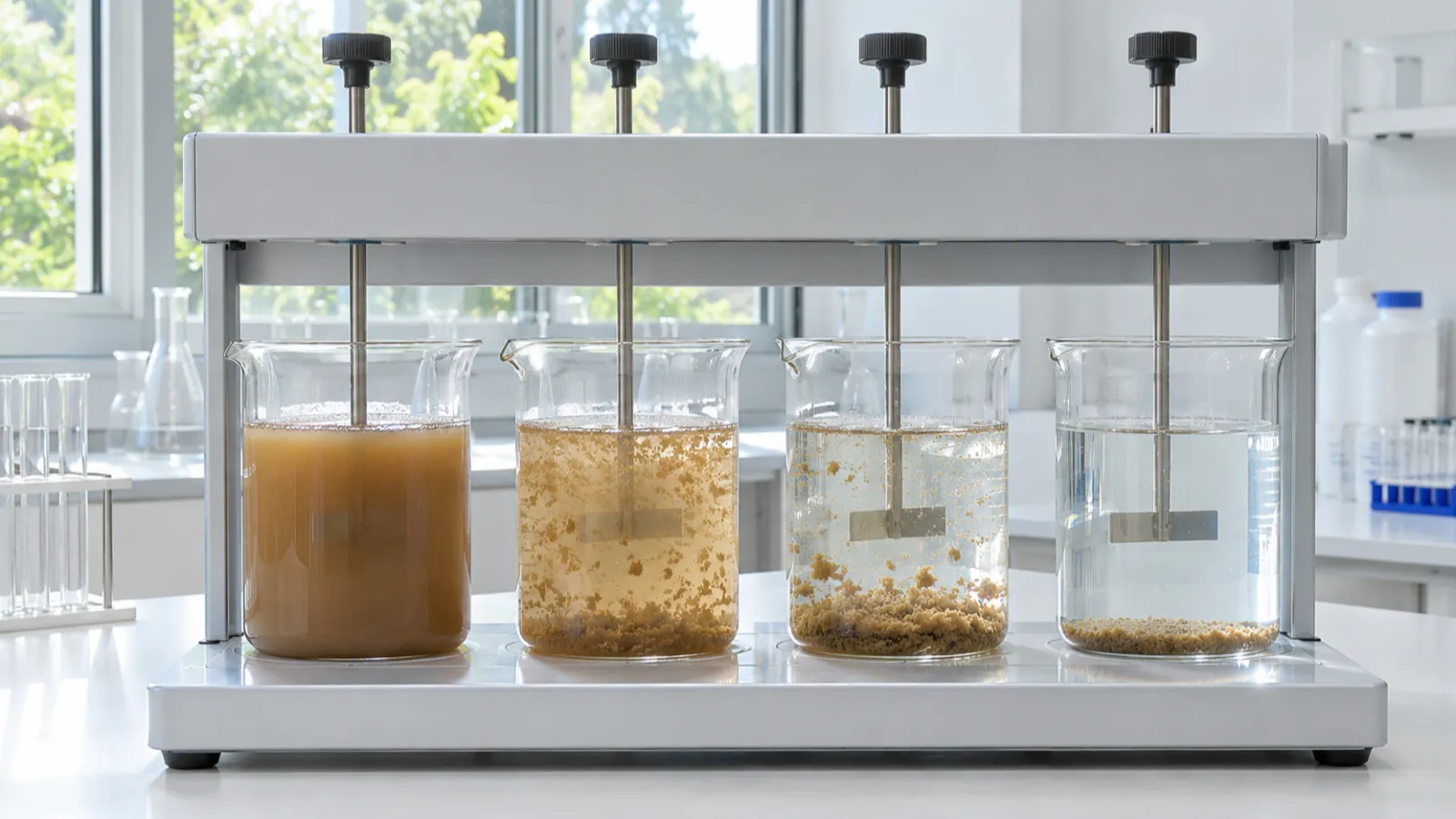
Send 1 litre of raw water or sludge. We test PAC and PAM grades side by side and send a written report with grades, ratio and starting dose.
How it works →FAQ
Short answers. For your own water, a jar test gives the real one.
Why do some suppliers still print GB 15892-2009 on bags?
GB 15892-2020 replaced the 2009 edition in August 2021, tightening chromium to total Cr and adding iron and ammonia-nitrogen limits. Always verify the 2020 standard on your COA.
Can I request a sample COA before ordering?
Yes — use the enquiry form below and we send the TDS, SDS and a sample COA within one working day.
 Checklist
 Guide
 Guide