
How the three machines compare on polymer demand
| Belt filter press | Volute screw press | Decanter centrifuge | |
|---|---|---|---|
| Shear level | Low to medium | Low to medium | High |
| Typical CPAM start | Medium charge · medium–high MW | Medium–high charge | High charge · shear-resistant |
| Key visual check | Fast gravity drainage, no belt blinding | Clean filtrate, steady cake discharge | Clear centrate, dry cake without wet tails |
| Common failure mode | Over-dosed slimy floc blinds cloth | Under-dosed floc slips between rings | Low-charge floc shears inside bowl |
See our full municipal sewage & sludge application page for dosing points across the water and sludge lines.
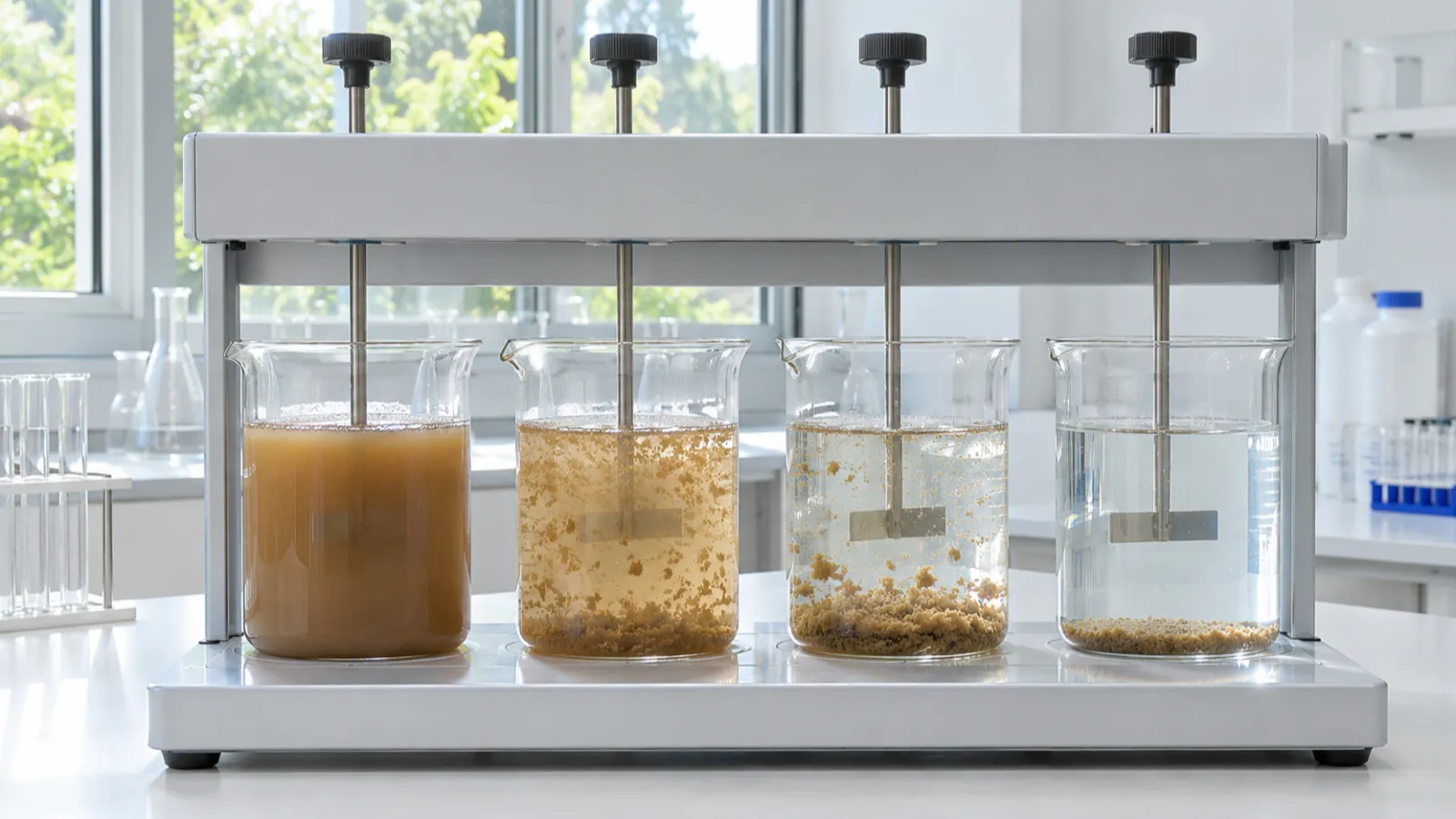
Free jar testConfirm grade and dose on your sample.
Send 1 litre of water or sludge. We test PAC and PAM combinations side by side and send a written report.
How it works →FAQ
Short answers. For your own water, a jar test gives the real one.
Can one CPAM grade run both a belt press and a centrifuge?
Sometimes, but a grade tuned for a belt press often produces cloudy centrate in a centrifuge. Testing on your actual sludge avoids high disposal costs.
Why did our sludge cake suddenly get wetter in winter?
Colder sludge increases viscosity and slows polymer hydration. Extend PAM make-down time or re-check charge density with a quick jar test.
Tagged
All guides →
 Checklist
 Guide
 Guide