What Al₂O₃ percentage actually measures
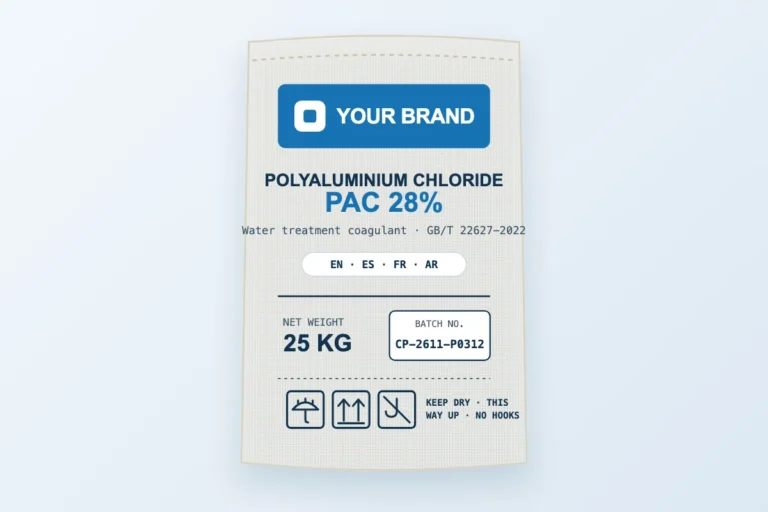
In polyaluminium chloride (PAC), Al₂O₃% is the standard measure of active coagulant strength. A 30% solid grade contains more active aluminium per kilogram of powder than a 28% grade — meaning fewer kilograms of dry product are normally required to neutralise the same particle load.
However, Al₂O₃ is not the only parameter that matters. Basicity (degree of polymerisation, 30–95% under GB/T 22627-2022) and water-insoluble matter also influence how fast flocs form and how clean your dosing tanks stay.
28% vs 30% vs economy grades side by side
| Grade | Al₂O₃ | Standard | Typical strengths |
|---|---|---|---|
| Industrial PAC 30% | 30% | GB/T 22627-2022 | Lower dose per m³, better freight efficiency for export, strong on dyeing & high COD |
| Industrial PAC 28% | 28% | GB/T 22627-2022 | Lower price per tonne, widely used across municipal & industrial wastewater |
| Economy PAC | 20% / 24% / 26% | Per TDS & COA | Budget option for sludge conditioning, wastewater and sand-washing water |
| Drinking-water PAC | ≥ 29.0% | GB 15892-2020 | Mandatory potable standard with strict heavy-metal limits and spray-dried low insolubles |
Why export buyers often pick 30% PAC
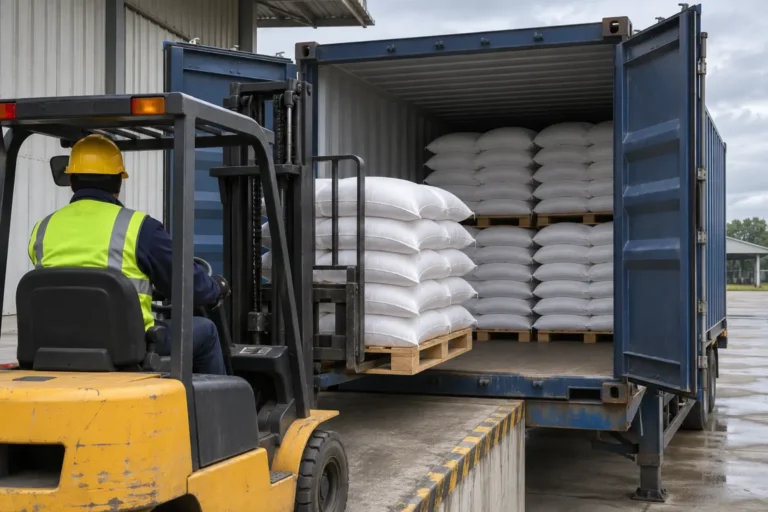
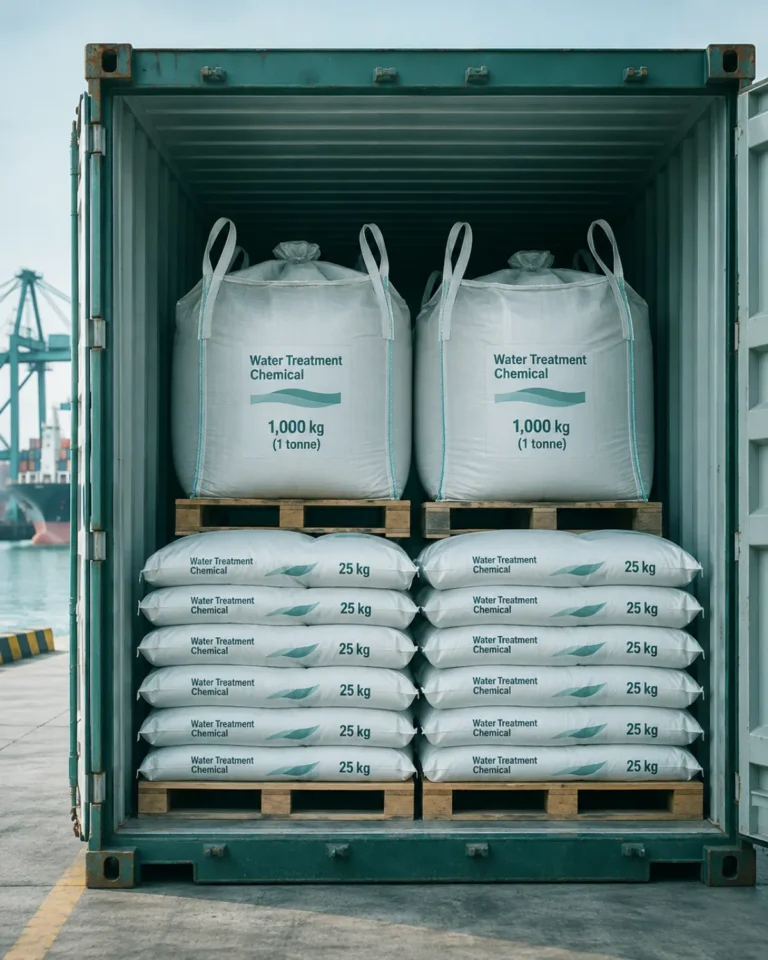
When shipping overseas in a 20 ft container (≈ 20–25 t), ocean freight and port handling are charged per container — not per unit of active Al₂O₃. Shipping 30% PAC instead of lower-strength grades puts more active coagulant into every container, often lowering your delivered cost per treated cubic metre.
On the other hand, if your plant has high-solids wastewater where a 28% or economy grade already hits your clarity target at nearly the same dose, the lower-priced grade wins. See our industrial PAC page for full specifications.
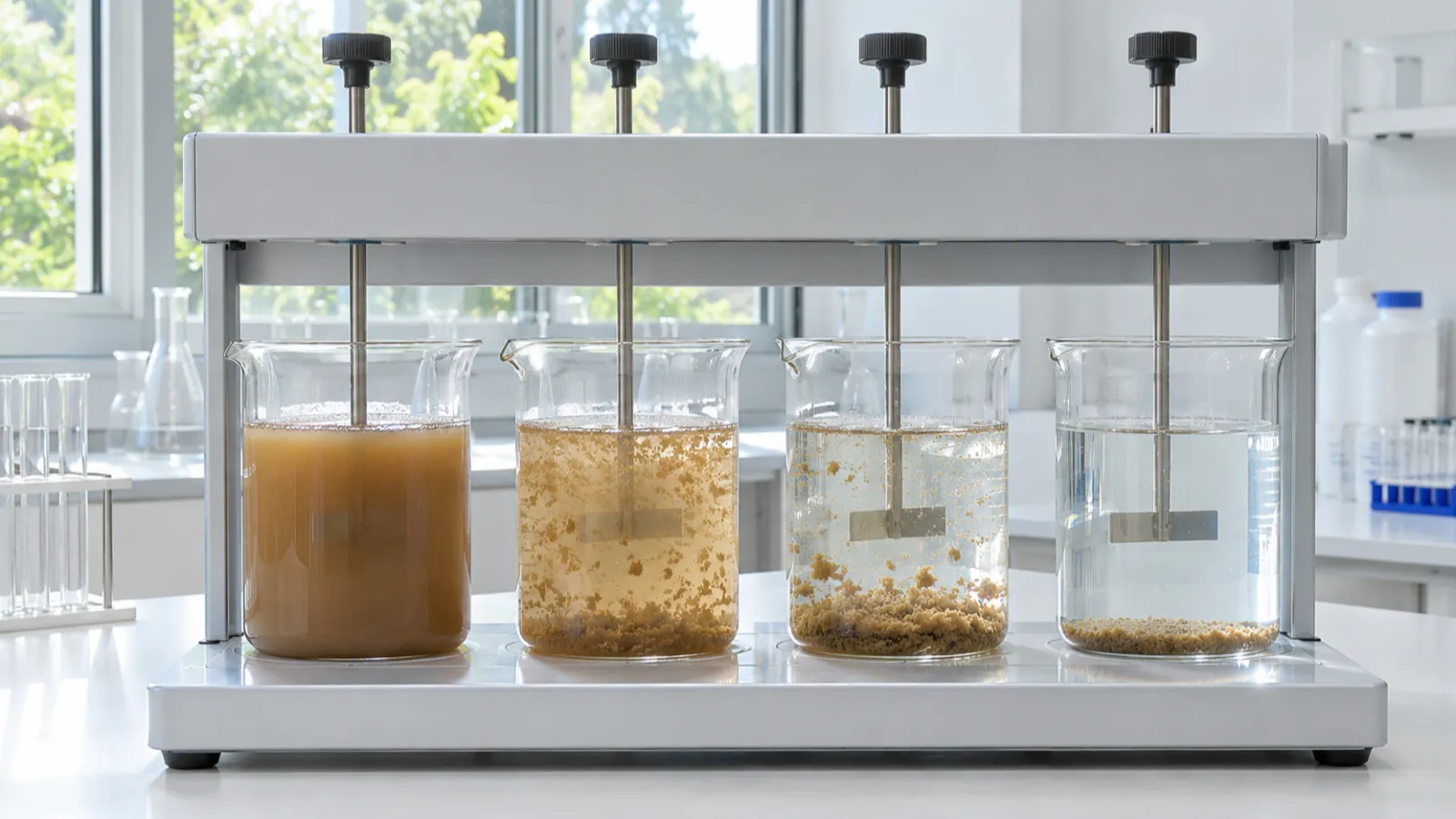
Send 1 litre of raw water or sludge. We test PAC and PAM combinations side by side and send a written report with grades, ratio and starting dose.
How it works →How to compare them fairly on your water
Run both 28% and 30% PAC in parallel on the same raw water using identical 1% stock solutions. Record the minimum mg/L dose of each grade that achieves your target turbidity or colour, then multiply each dose by its delivered CIF price per kilogram. That single number tells you immediately which grade saves money.
FAQ
Short answers. For your own water, a jar test gives the real one.
Can I use 30% industrial PAC for drinking water?
No. Potable water requires drinking-water PAC made to GB 15892-2020 (Al₂O₃ ≥ 29.0%) with strict heavy-metal limits — see our drinking-water PAC page.
Is 30% PAC always brighter yellow than 28%?
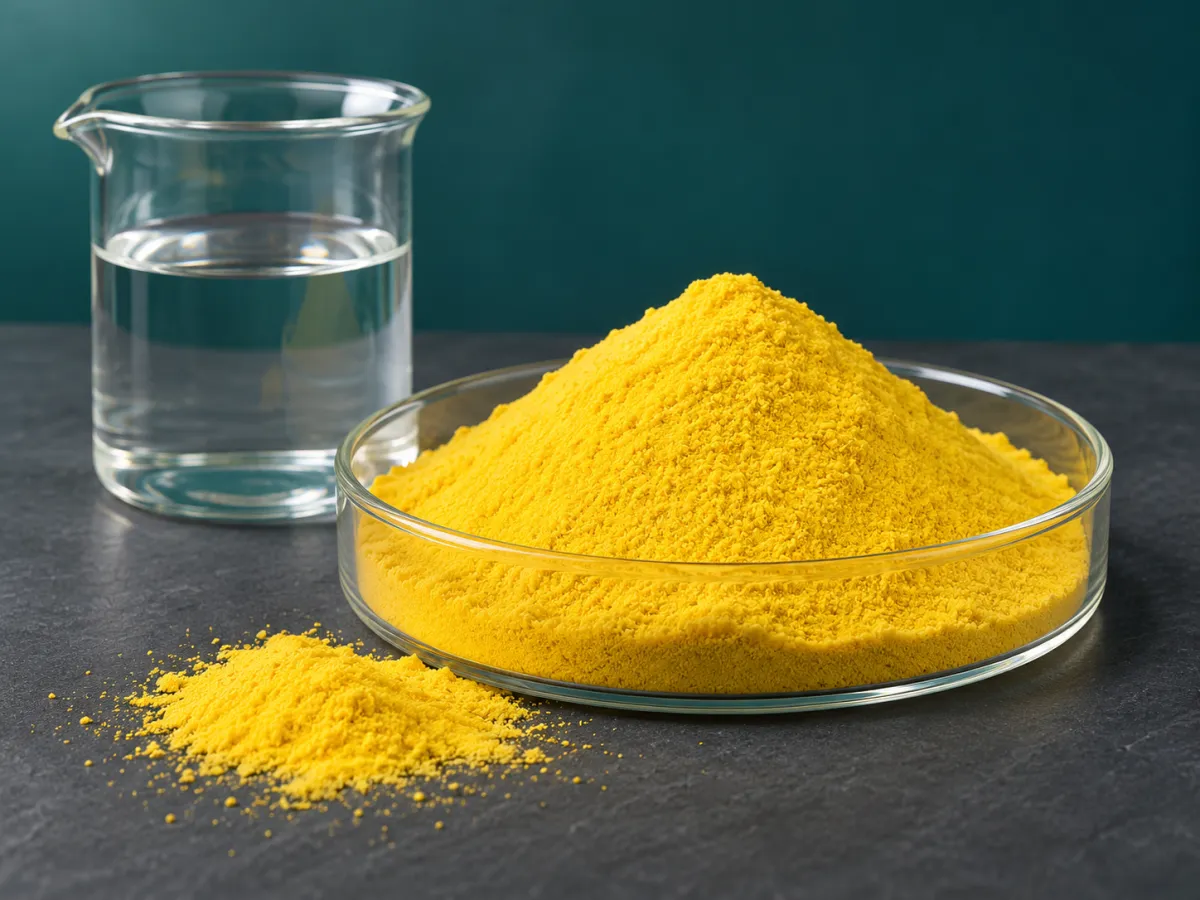
Spray-dried 30% grades are usually brighter yellow, while drum-dried 28% and 30% grades range from yellow to light brown. Colour alone does not prove Al₂O₃ — always verify on the batch COA.
Can Claripoly send 1 kg samples of both 28% and 30%?
Yes. Samples are free of charge (buyer covers courier) so your lab can compare both grades side by side.
 Checklist
 Guide
 Guide