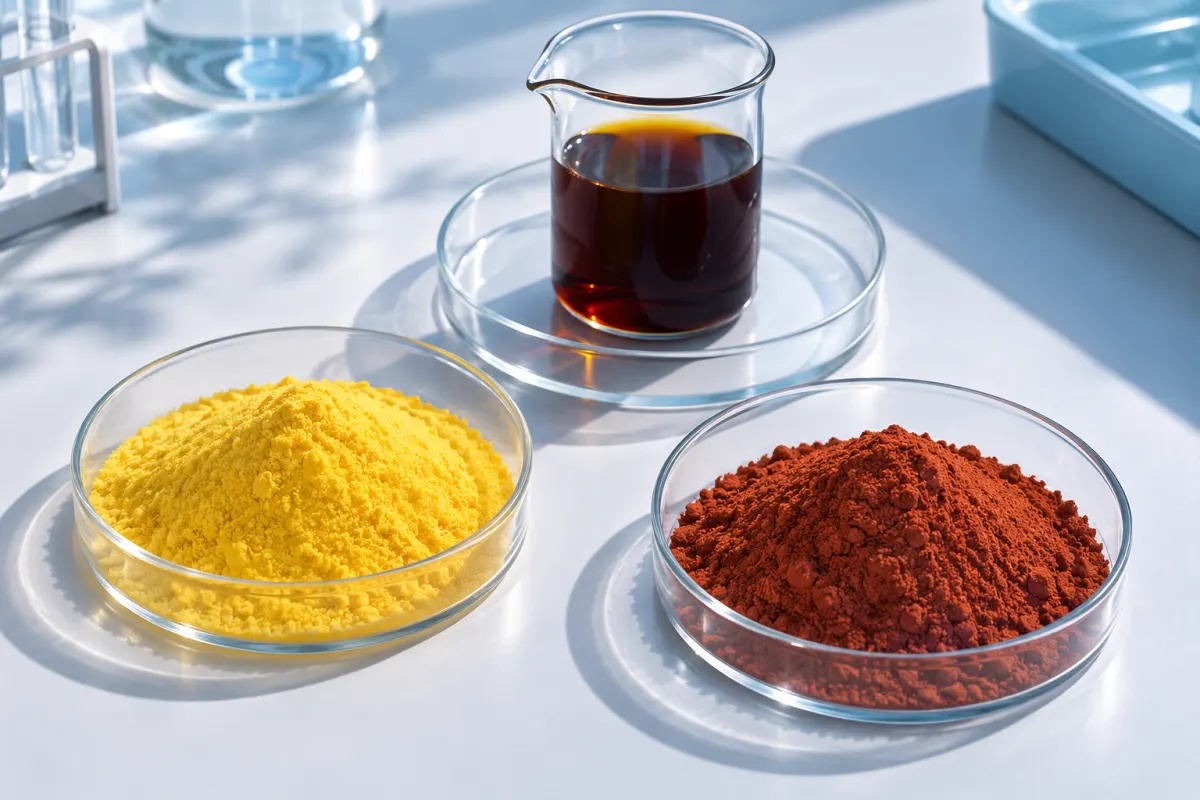
Coagulants compared side by side
| PAC | Ferric chloride | PFS (Polyferric sulfate) | |
|---|---|---|---|
| Active metal | Aluminium (pre-polymerised) | Iron (Fe³⁺) | Iron (polymerised) |
| Effective pH | Broad (≈ 5–9) | Broad, drops pH sharply | Broad (≈ 4–11) |
| Corrosiveness | Mildly acidic (handle with PPE) | Highly corrosive to steel & concrete | Moderate–high |
| Residual colour risk | None (clear effluent) | Yellow/brown tint if overdosed | Yellow/brown tint if overdosed |
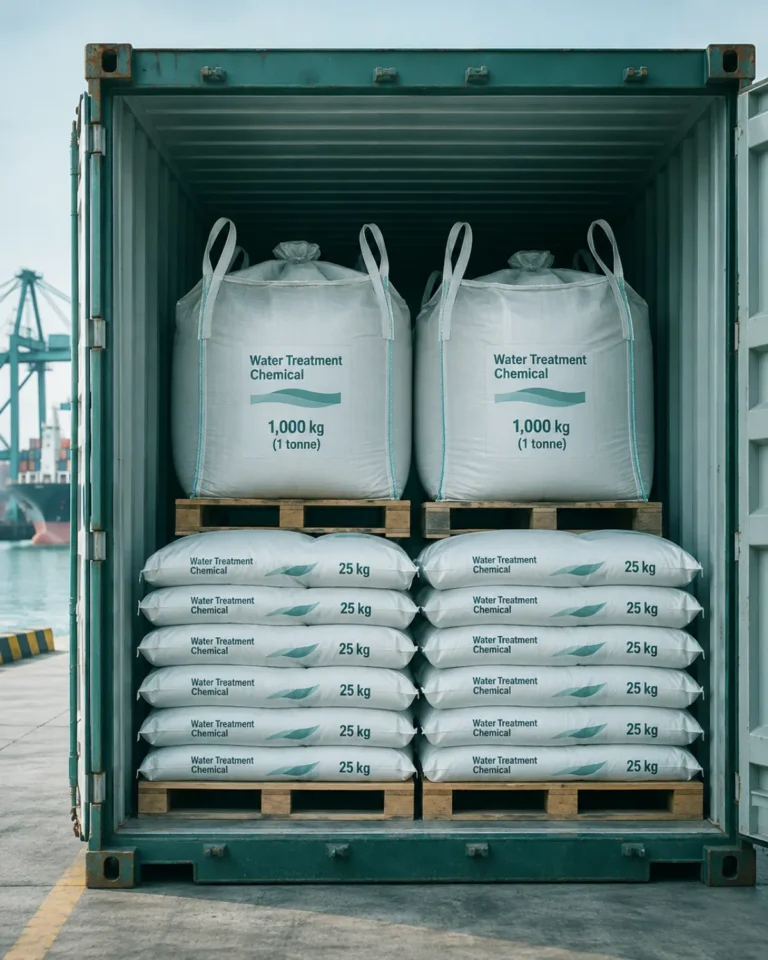
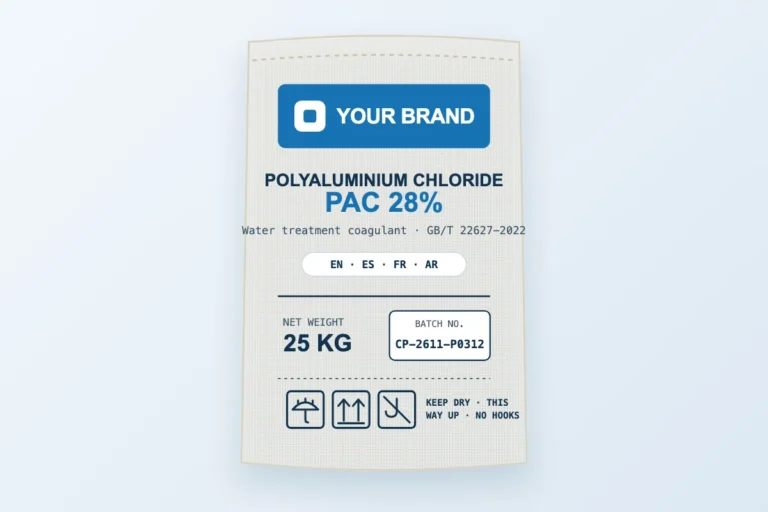
| Handling & export | Dry 25 kg / 1 t bags, easy sea freight | Often liquid; hazardous & corrosive | Dry bags; hygroscopic |
When PAC is the cleanest choice
For drinking water, textile dyeing, paper mills and municipal sewage plants that want dry exportable bags, low alkalinity consumption and no iron staining, PAC is usually the first coagulant tested.
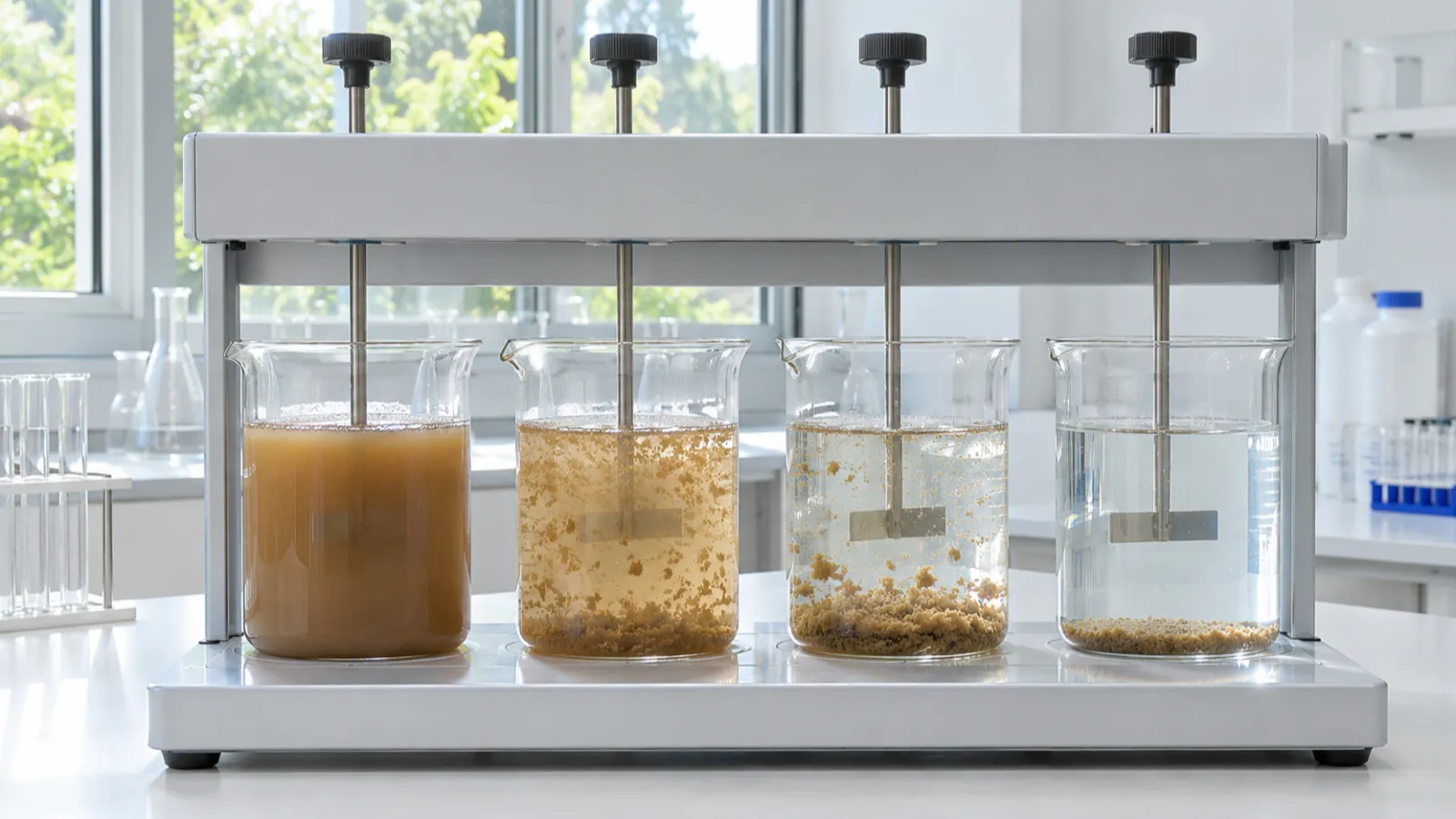
Free jar testTest it on your own water.
Send 1 litre of raw water or sludge. We test PAC and PAM grades side by side and send a written report with grades, ratio and starting dose.
How it works →FAQ
Short answers. For your own water, a jar test gives the real one.
Can PAC replace alum (aluminium sulphate) directly?
Yes — PAC usually works at a lower dose, forms flocs faster in cold water and causes less pH drop than alum. A jar test sets the exact replacement ratio.
Does PAC remove phosphorus as well as iron salts?
Yes. Aluminium in PAC precipitates phosphate effectively in municipal and food wastewater.
Tagged
All guides →
 Checklist
 Guide
 Guide