Turbidity and TSS side by side
| Turbidity (NTU) | TSS (mg/L) | |
|---|---|---|
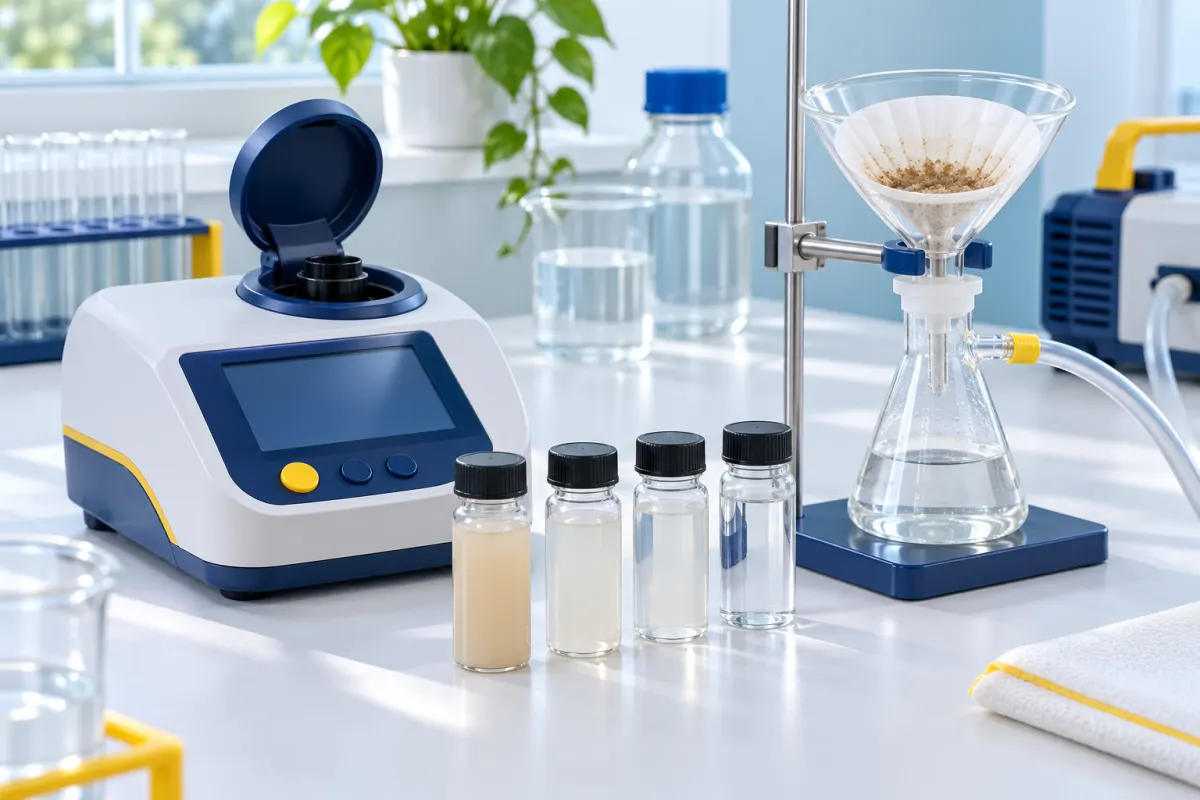
| What it measures | Light scattered by suspended particles | Dry mass of solids retained on a standard filter |
| Most sensitive to | Fine colloids, clay, bacteria, pin flocs | Heavier silt, organic flocs, mineral fines |
| How fast to measure | Seconds with a handheld or online meter | Lab filtration, drying and weighing (hours) |
| Primary chemical control | Coagulant (PAC or drinking-water PAC) | Flocculant (PAM) + clarifier / filter |
Why one can be high while the other looks fine
In drinking water plants, outlet turbidity must stay very low even when TSS is tiny — fine colloids scatter light and shield pathogens. In sand washing or wastewater discharge, permits usually cap TSS in mg/L.
If your clarifier drops 90% of TSS but leaves a milky haze (high NTU), add or increase PAC before PAM. If water between flocs is crystal clear (low NTU) yet flocs float over the weir (high TSS), tune PAM dose or reduce hydraulic turbulence.
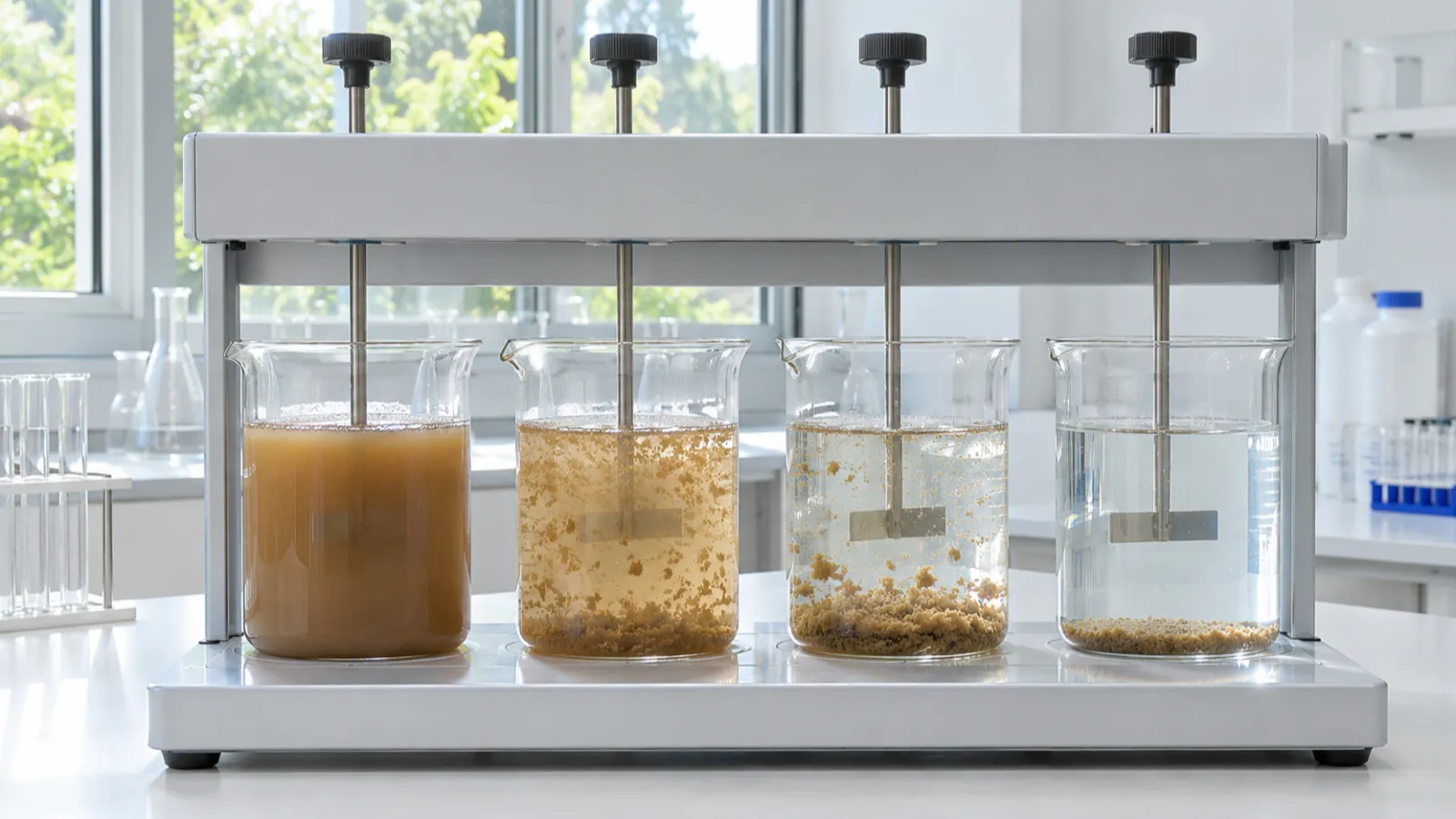
Send 1 litre of raw water or sludge. We test PAC and PAM grades side by side and send a written report with grades, ratio and starting dose.
How it works →FAQ
Short answers. For your own water, a jar test gives the real one.
Is there a fixed conversion factor between NTU and mg/L TSS?
No universal factor exists because particle size, shape and colour vary by plant. You can build a site-specific correlation curve on your own water.
Which chemical lowers turbidity fastest?
PAC (industrial or drinking-water grade) neutralises the fine colloids responsible for turbidity; PAM then settles the resulting micro-flocs.
 Checklist
 Guide
 Guide