How to tell if it is chemistry or equipment
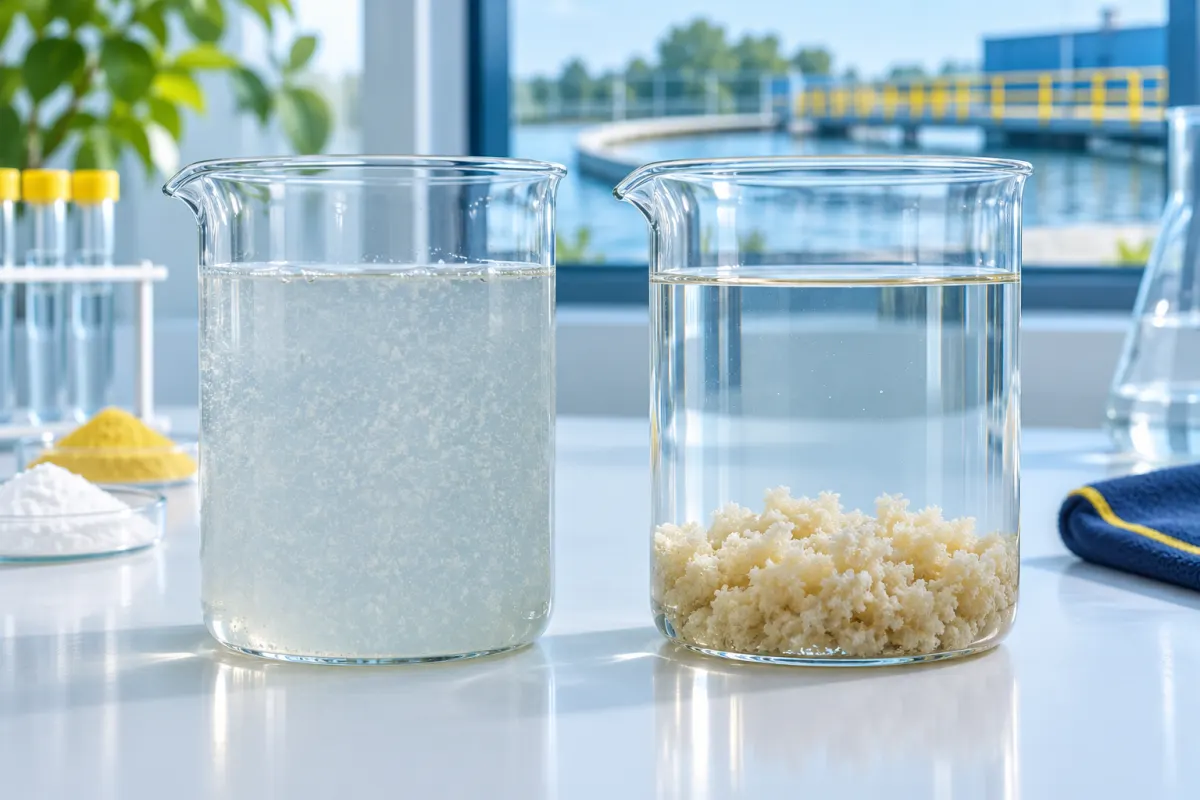
Before changing suppliers or doubling your chemical dose, scoop 1 litre of untreated water and run a quick bench jar test using your exact plant tanks. If the beaker builds big flocs while the clarifier only shows pin flocs, the problem is mixing or shear — not the chemical.
The 8 most common causes (and how to fix each)
Using anionic PAM on organic sludge (or cationic on heavy neutral sand) produces tiny, weak flocs. Confirm charge with a side-by-side jar test.
PAC works best around pH 5–9. Sudden acidic or caustic washdowns stop aluminium hydrolysis and leave water cloudy.
If PAM enters before PAC has finished coagulating, the two chemicals interfere. Leave 30–60 seconds of reaction time between dosing points.
Fast agitators, sharp pipe elbows, throttling valves or centrifugal transfer pumps tear formed PAM flocs into fine haze that will not re-bridge.
Too much PAC flips particle charge from negative to positive so particles repel each other again. Test a lower dose first, not only higher doses.
Dilute PAM left in a tank for more than 24–48 hours loses chain length and viscosity. Mix smaller batches daily.
Undissolved gel lumps mean less active polymer reaches the water. Check make-down strength (0.1–0.2%) and hydration time.
Cold winter water slows floc growth, and heavy rain or production changes shift solids concentration. Re-run a quick jar test to update the dose.
Quick diagnostic checklist
| What you see | Most likely cause | First check |
|---|---|---|
| Cloudy water + tiny pin flocs | Under-dosed or over-dosed PAC, or pH off | Check pH; run 4-beaker PAC ladder |
| Flocs form in tank, break at clarifier | High shear in pipe, valve or pump | Move PAM dosing closer to clarifier inlet |
| Gel strings on press belt + wet cake | Fish eyes or overdosed PAM | Check make-down tank & lower strength to 0.1% |
| Worked yesterday, failed today | Raw-water shift or stale PAM tank | Check inlet pH/COD and PAM tank age |
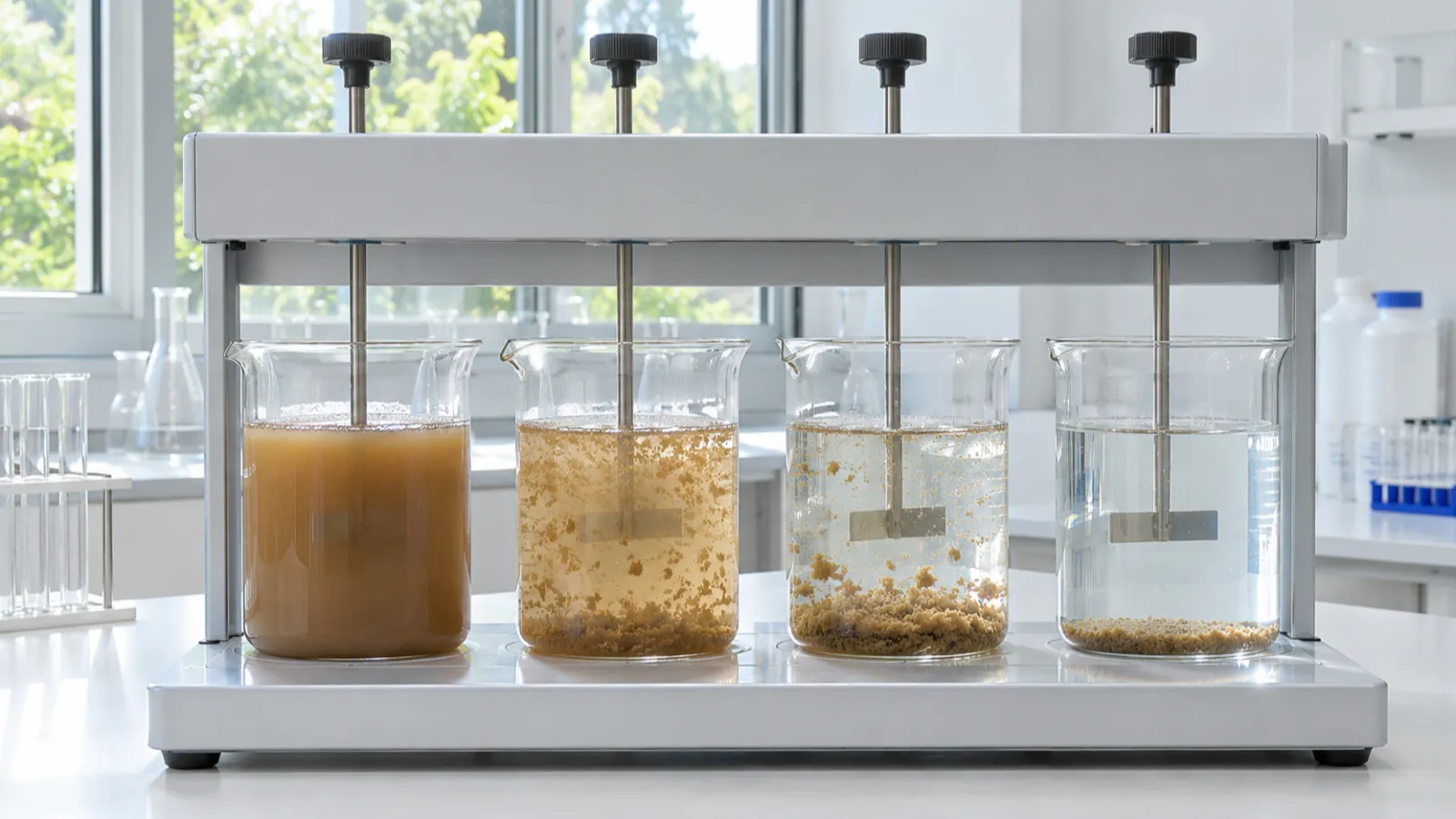
Send 1 litre of raw water or sludge. We test PAC and PAM combinations side by side and send a written report with grades, ratio and starting dose.
How it works →FAQ
Short answers. For your own water, a jar test gives the real one.
If flocs break in a pump, will they grow back in the clarifier?
Rarely to their original size. Once long PAM chains are mechanically sheared, bridging strength drops permanently — always dose PAM downstream of high-shear pumps.
Why did doubling my PAC dose make turbidity worse?
Overdosing PAC causes restabilisation (charge reversal), pushing particles back into suspension. Step the dose down in a jar test.
Can Claripoly help diagnose our water?
Yes. Send 1 L of your water or sludge with a short note on what you are seeing — our lab tests it free of charge.
 Checklist
 Guide
 Guide