Two jobs, two products
Most particles that make water cloudy are tiny and carry a negative charge. Because like charges repel, they stay suspended for hours or days. Getting them out takes two steps.
The first step is coagulation: cancelling the charge so the particles can touch and stick. That is what PAC (polyaluminium chloride) does. The second step is flocculation: gathering the small clumps into flocs large and heavy enough to settle, float or press. That is what PAM (polyacrylamide) does.
PAC and PAM side by side
They are often sold together and dosed a few metres apart, but they behave very differently.
| PAC | PAM | |
|---|---|---|
| Job | Coagulant — destabilises fine particles | Flocculant — builds large flocs |
| How it works | Positive aluminium species neutralise the negative charge on particles, so they stop repelling each other | Long polymer chains attach to several small flocs at once and bridge them together |
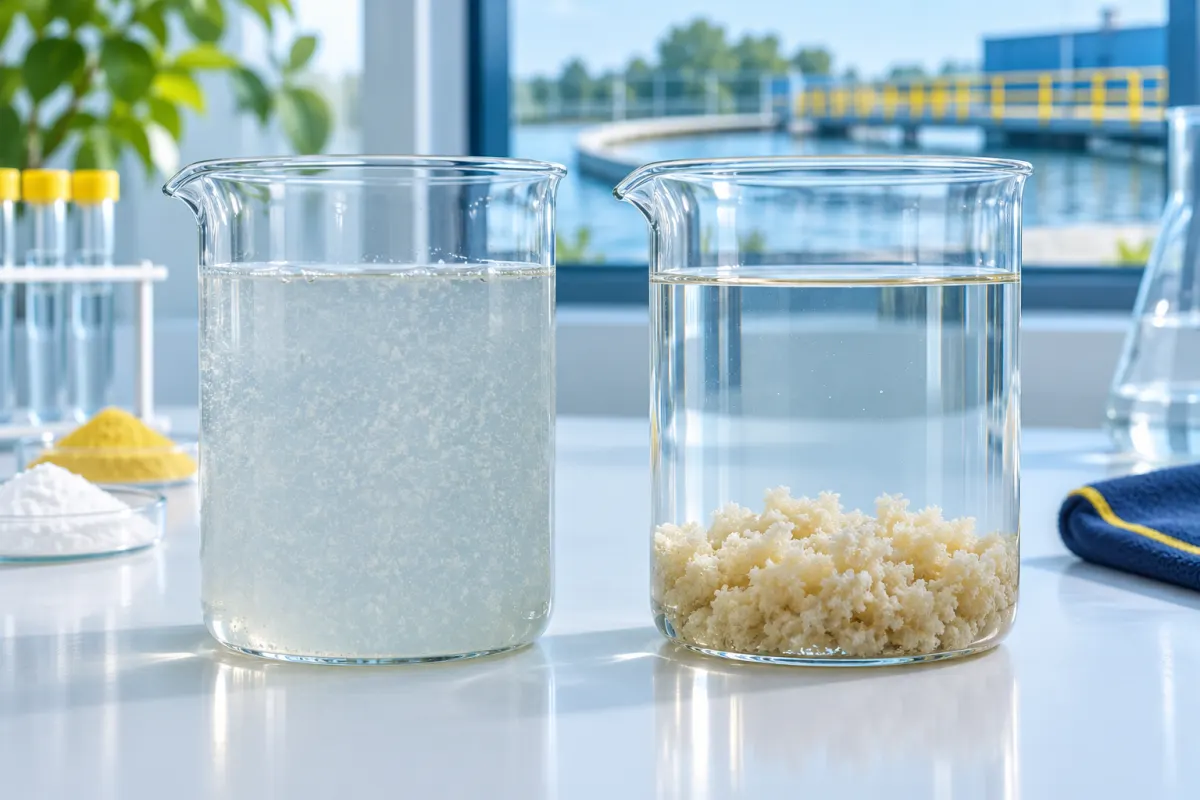
| What you see | Water turns hazy with tiny pin flocs | Pin flocs gather into large flocs that drop fast |
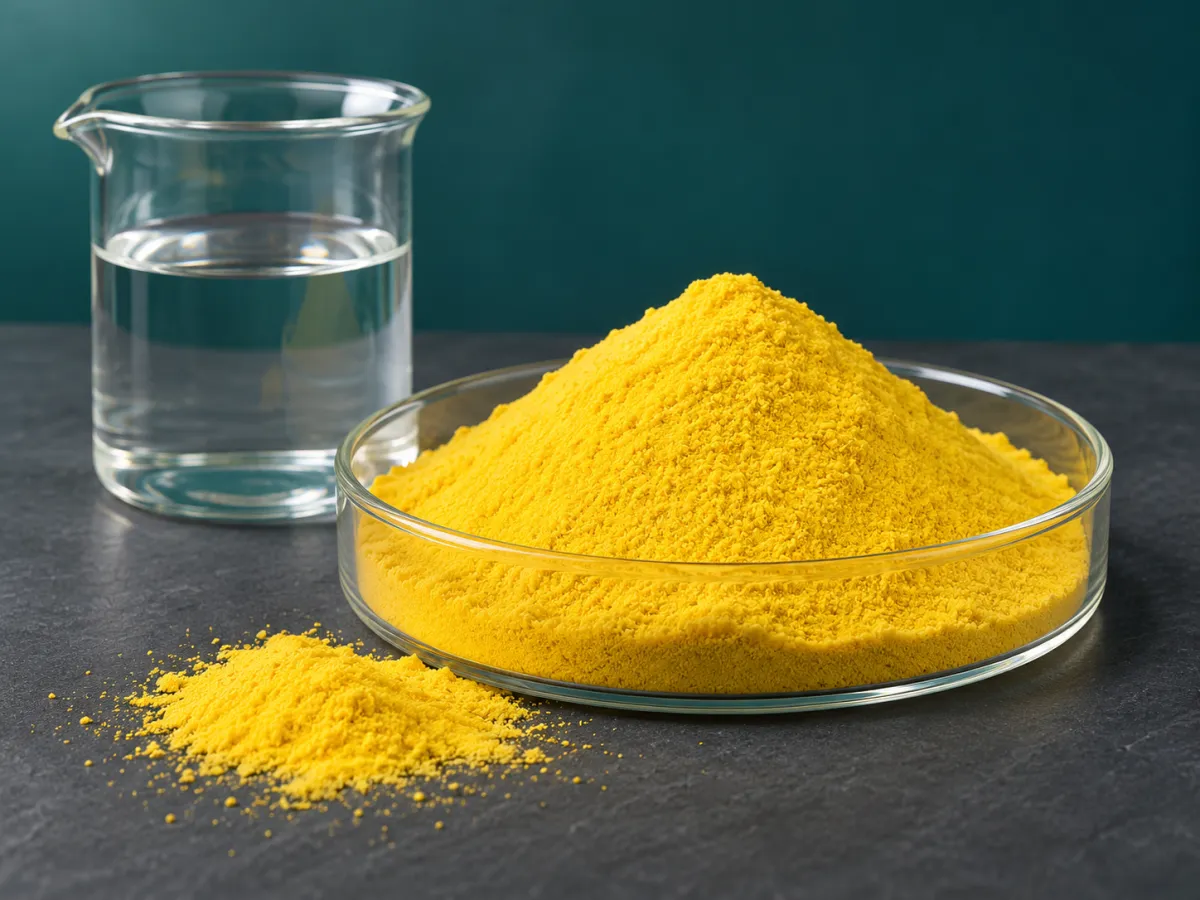
| Typical form | Yellow or brown powder, dissolved before dosing | White granules, made down into a dilute solution |
| Dose scale | The larger of the two doses | Usually far smaller — often by an order of magnitude |
| Mixing | Rapid, intense mixing for a short time | Gentle, slow mixing — high shear breaks the flocs |
| Where it goes | At the start: rapid-mix tank or the inlet pipe | After coagulation: slow-mix zone, or before the press for sludge |
The dosing order
Order matters as much as dose. PAC goes in first, PAM second — and the mixing changes between them.
- 1Dose PAC into rapid mixing
Spread it through the water fast, before the particles can react unevenly.
- 2Give it time to form pin flocs
A short delay lets the charge neutralise. The water turns hazy with tiny flocs.
- 3Dose PAM into slow mixing
Gentle mixing lets the chains reach several pin flocs without tearing the new flocs apart.
- 4Let the flocs settle or separate
Large, dense flocs settle in the clarifier, float in DAF, or release water on the press.
When one product is enough
“Most plants need both” is not “every plant needs both”. Three common cases use one product on its own:
 PAC aloneDrinking water with good filters
Where filters catch what settling misses, a coagulant on its own is often enough. Drinking-water PAC is made to GB 15892-2020.
 Cationic PAM aloneSludge dewatering
Sludge is already concentrated. A cationic PAM conditions it on the belt press, screw press or centrifuge.
 Anionic PAM aloneSand, gravel and mineral slurries
Heavy mineral particles often settle with an anionic PAM alone, giving clear water to reuse.
How the jar test sets the ratio
There is no fixed PAC : PAM ratio. It depends on the particles, the pH, the temperature and the equipment that follows. A jar test answers it directly: the same water in several beakers, different doses side by side, and the clearest result wins.
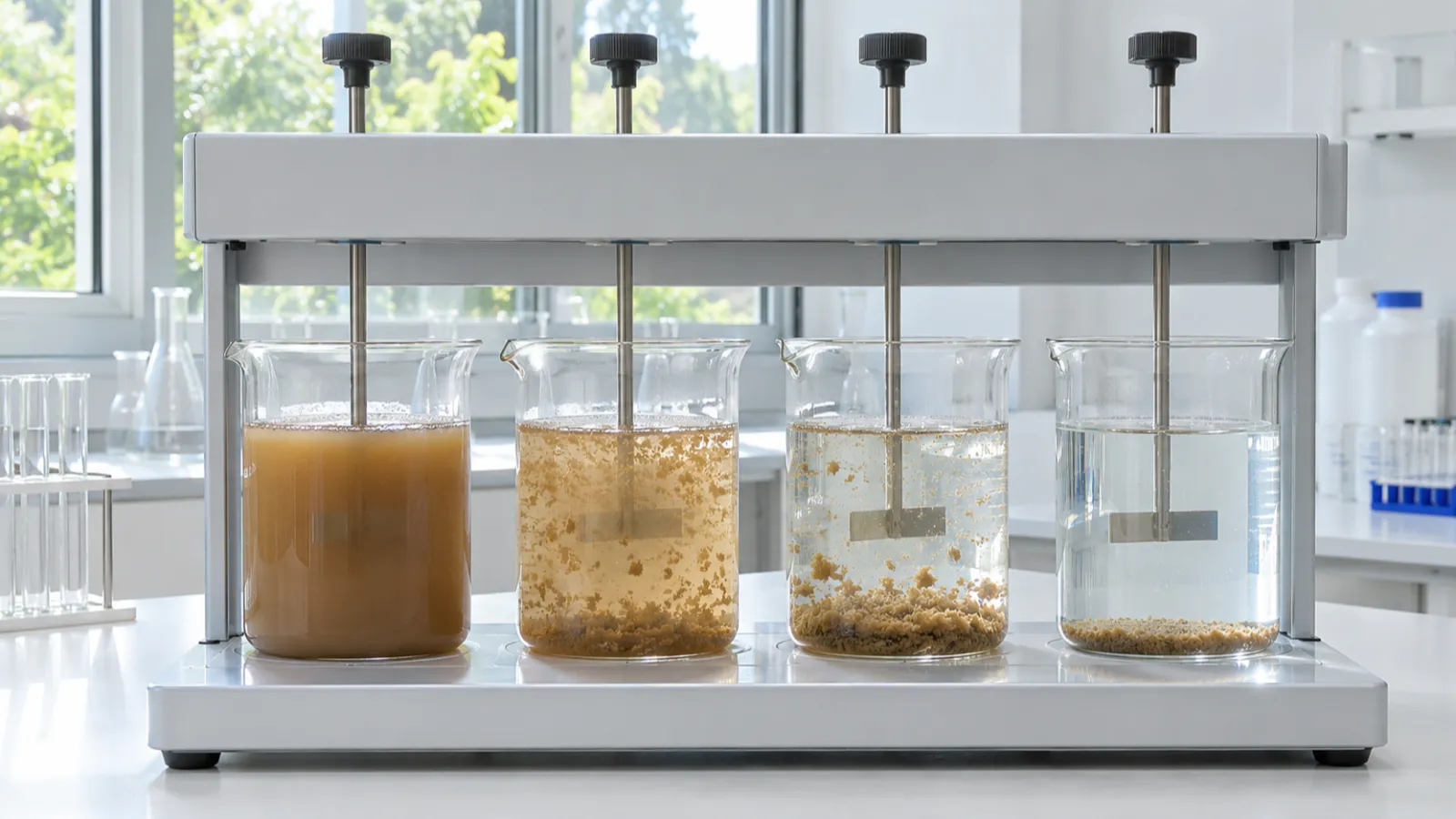
Send 1 litre of water or sludge. We test PAC and PAM combinations side by side and send a written report with the grades, the PAC : PAM ratio and a starting dose.
How it works →Want to run it yourself? Read How to run a jar test in 30 minutes.
Common mistakes
Most poor results with PAC and PAM come from how they are dosed, not from the products themselves.
The chains coat particles that are still charged. Flocs stay small and fragile.
Pumps, drops and fast mixers break large flocs; they rarely re-form as well.
Overdosing either product can re-stabilise the particles and turn the water cloudy again.
Fish eyes and aged solution waste polymer and leave weak flocs.
The same PAC and PAM behave differently on different water. Test on yours.
Related: Why your floc is small: 8 common causes · Dissolving PAM without fish eyes
FAQ
Short answers. For your own water, a jar test gives the real one.
Can PAM replace PAC?
Sometimes, but not usually for fine or colloidal particles. PAM bridges particles that are already destabilised; on very fine, charged particles it needs a coagulant first. Sludge dewatering and heavy mineral slurries are the common exceptions.
Which goes in first, PAC or PAM?
PAC first, with rapid mixing, then PAM after the pin flocs have formed, with slow mixing. Reversing the order usually gives small, weak flocs.
How much PAM do I need compared with PAC?
Much less. The PAM dose is usually far smaller than the PAC dose, but the right ratio depends on your water — a jar test sets it.
Does PAC change the pH?
PAC is acidic, so it lowers the pH slightly. A higher-basicity PAC lowers it less, which matters in soft or low-alkalinity water.
Which PAM type goes with PAC?
In most water and wastewater clarification, an anionic PAM follows PAC. For sludge, a cationic PAM is used. The jar test confirms the charge and molecular weight.
 Checklist
 Guide
 Guide